
Guides
Practical help with fuse beads, cross-stitch and diamond painting: how to iron, which beads and boards to buy, how to read a pattern and how to fix what went wrong.
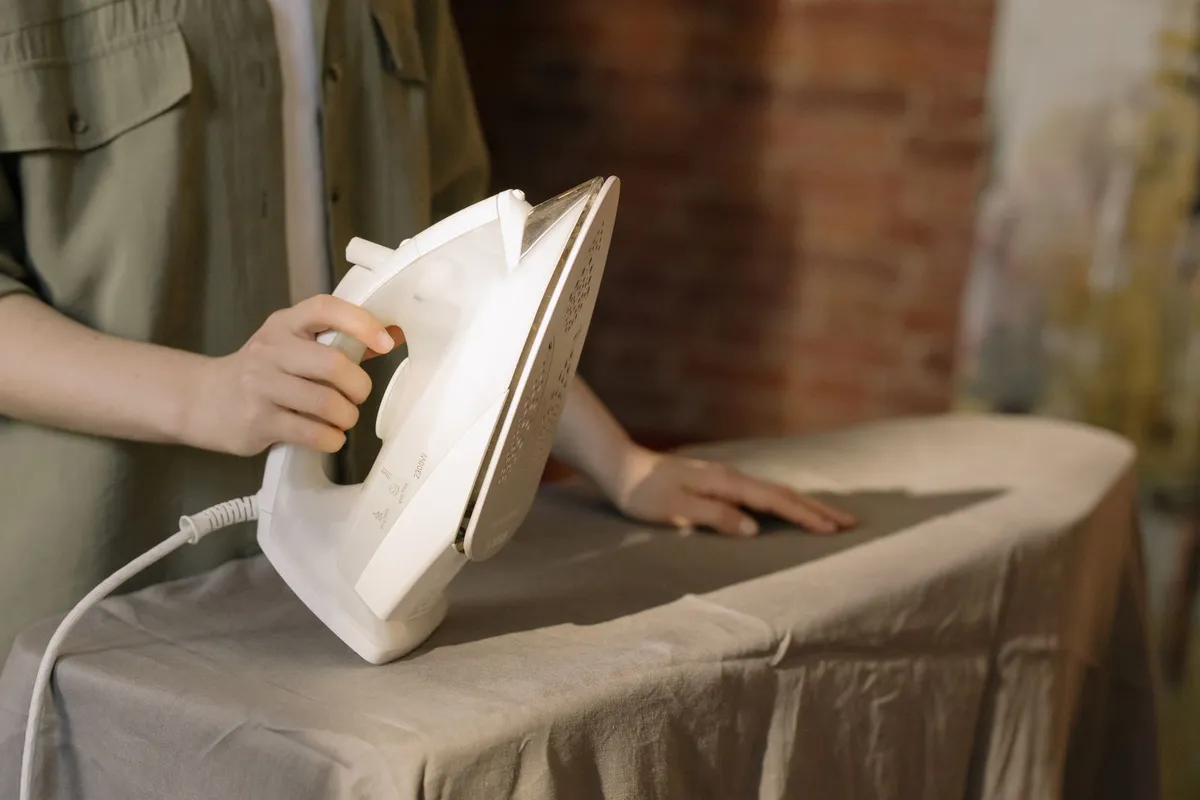
How to iron fuse beads
Ironing is the step that turns loose beads into one piece. It goes right with the correct iron setting, ironing paper, small circles and a heavy book while it cools. Here is how, for Hama and Perler beads.
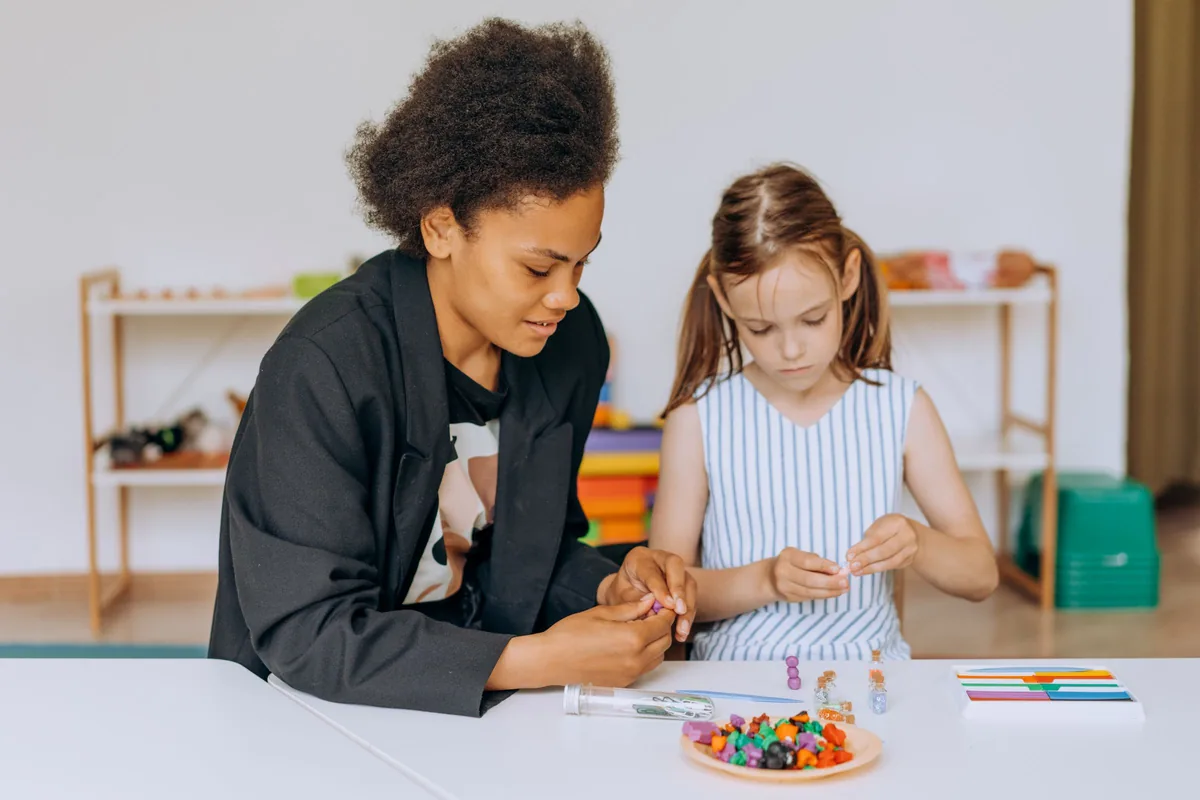
What age can children start with fuse beads?
The short answer: from about 3 with the big Maxi beads, from 5 with the normal 5 mm beads, and from 10 with mini beads. The longer answer depends less on the age on the box than on what your child's fingers can do and how long they can sit. Here is what the makers say, what each age can really manage, and the jobs that stay with you.
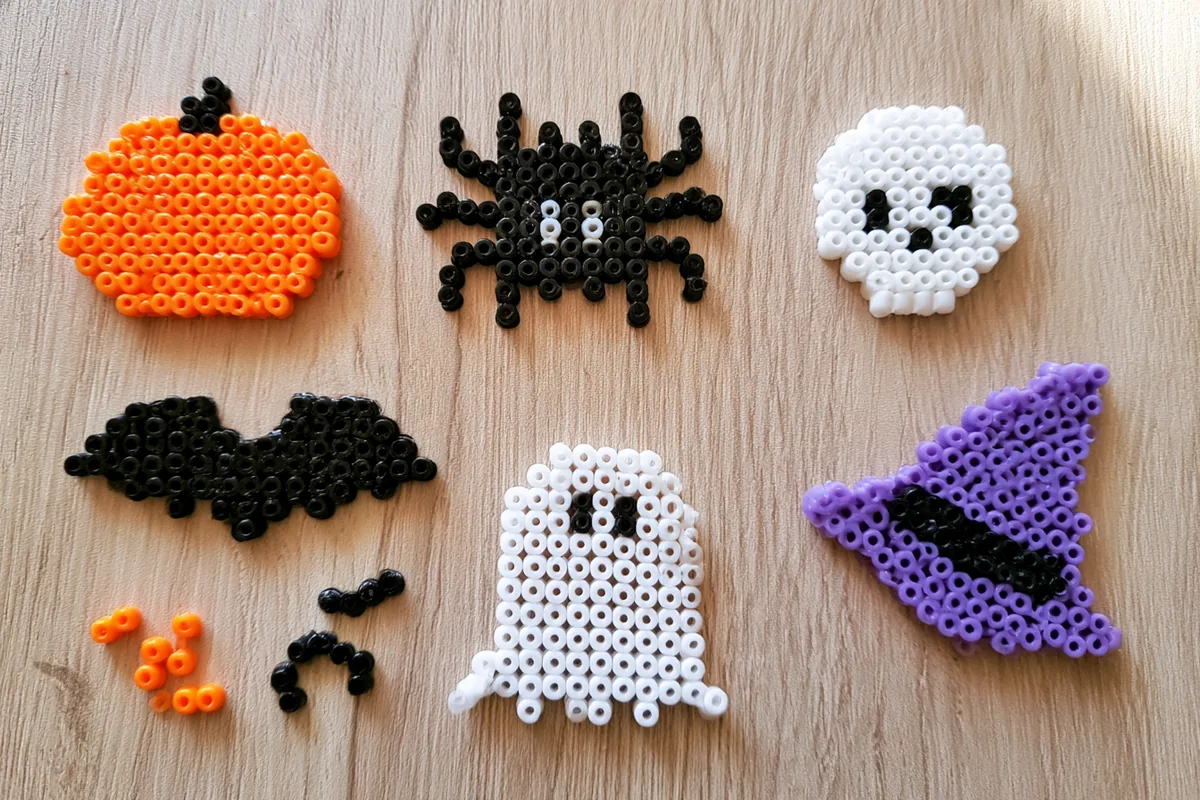
Halloween fuse bead patterns: pumpkin, spider, skull, bat, ghost, witch's hat and black cat
Halloween is the easiest season for fuse beads: three colours, strong shapes and pieces that are meant to look a little rough. Here is how to build the seven classic motifs on a single pegboard, where children usually go wrong, what to do with the finished pieces, and a plan for one afternoon that ends with everything hanging in the window.
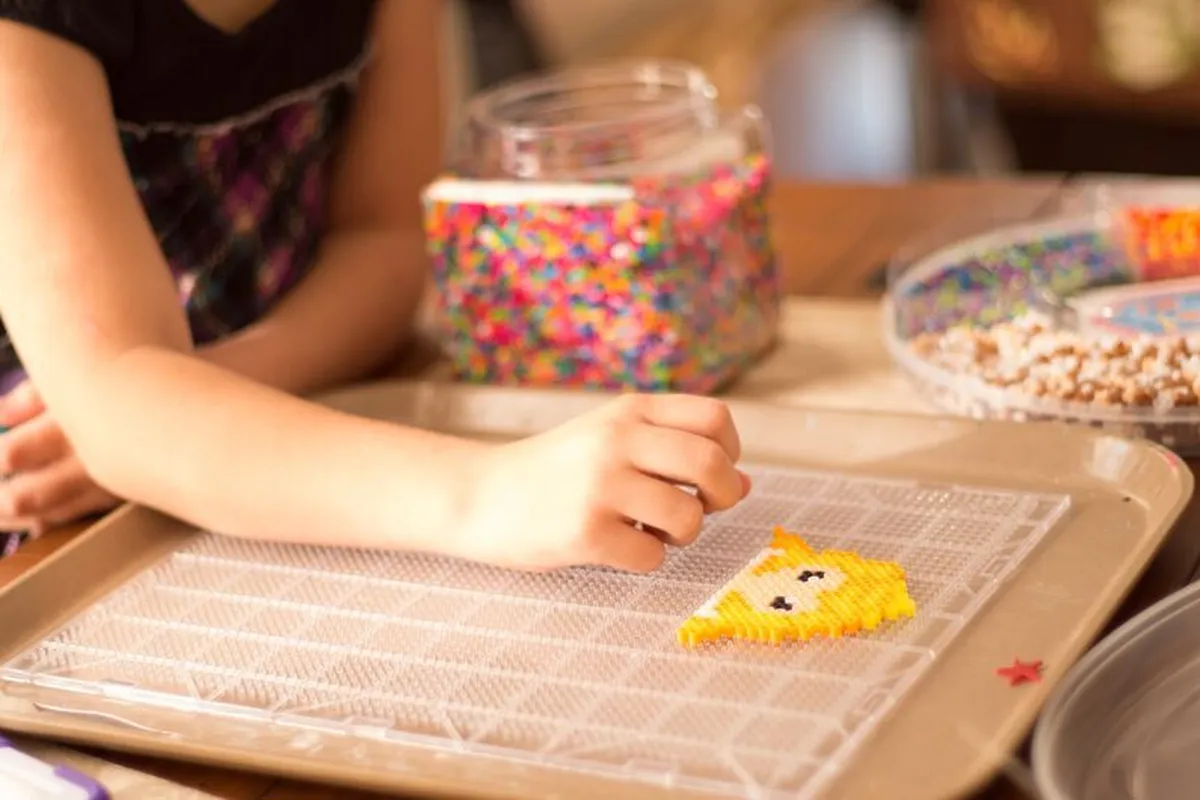
How to read a fuse bead pattern, and make your own
A fuse bead pattern is a grid where every square is one bead. Once you know how the colour key, the row numbers and the board split work, you can follow any pattern, print it at the right size and build your own from a drawing or a photo.
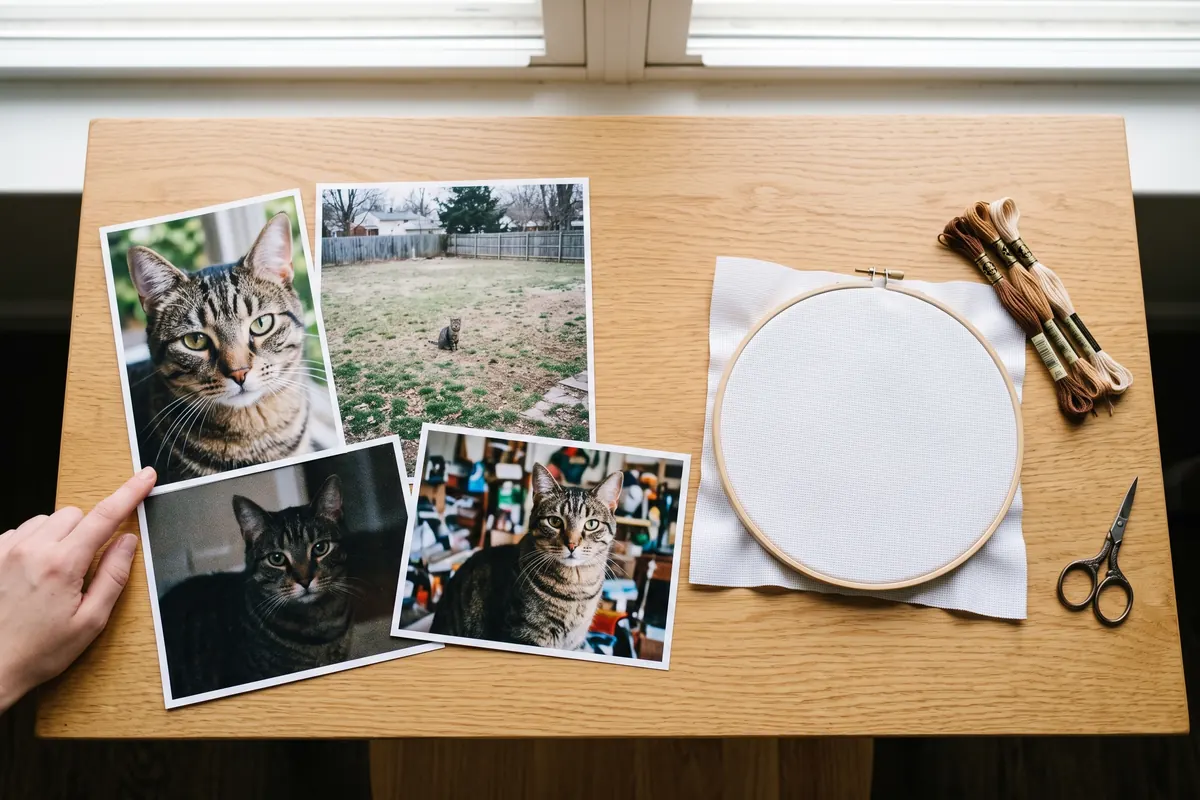
How to choose a photo for a bead, cross-stitch or diamond painting pattern
A pattern has far fewer cells than your photo has pixels, so only big shapes and strong contrasts make it through. Here is how many cells each craft gives you, what to look for in a photo, which photos tend to disappoint, and what to do when the first try doesn't work.
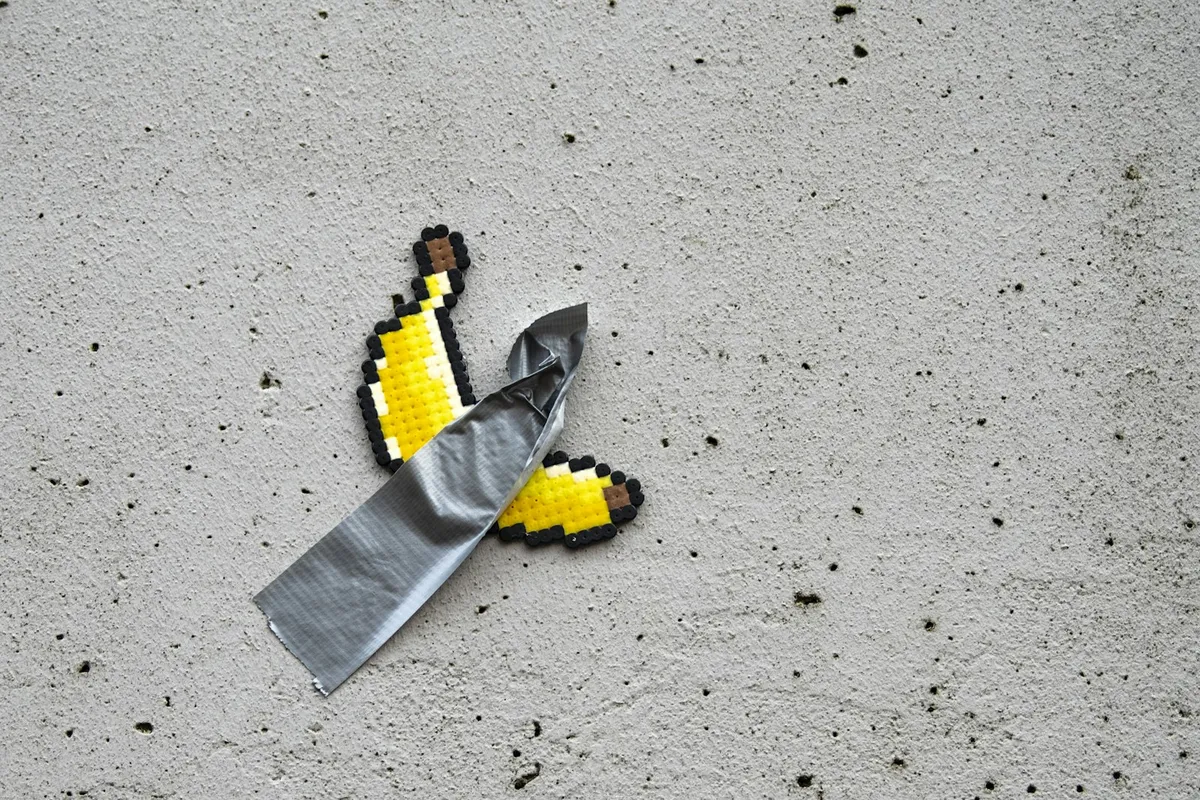
Easy fuse bead ideas for beginners and children
The easiest fuse bead designs have few colours, a clear outline and fit on one pegboard. Below are ideas in groups, from a first heart on a shaped board to keyrings, coasters and a portrait of your pet, with a line on how to make each one and tips for doing it with children.
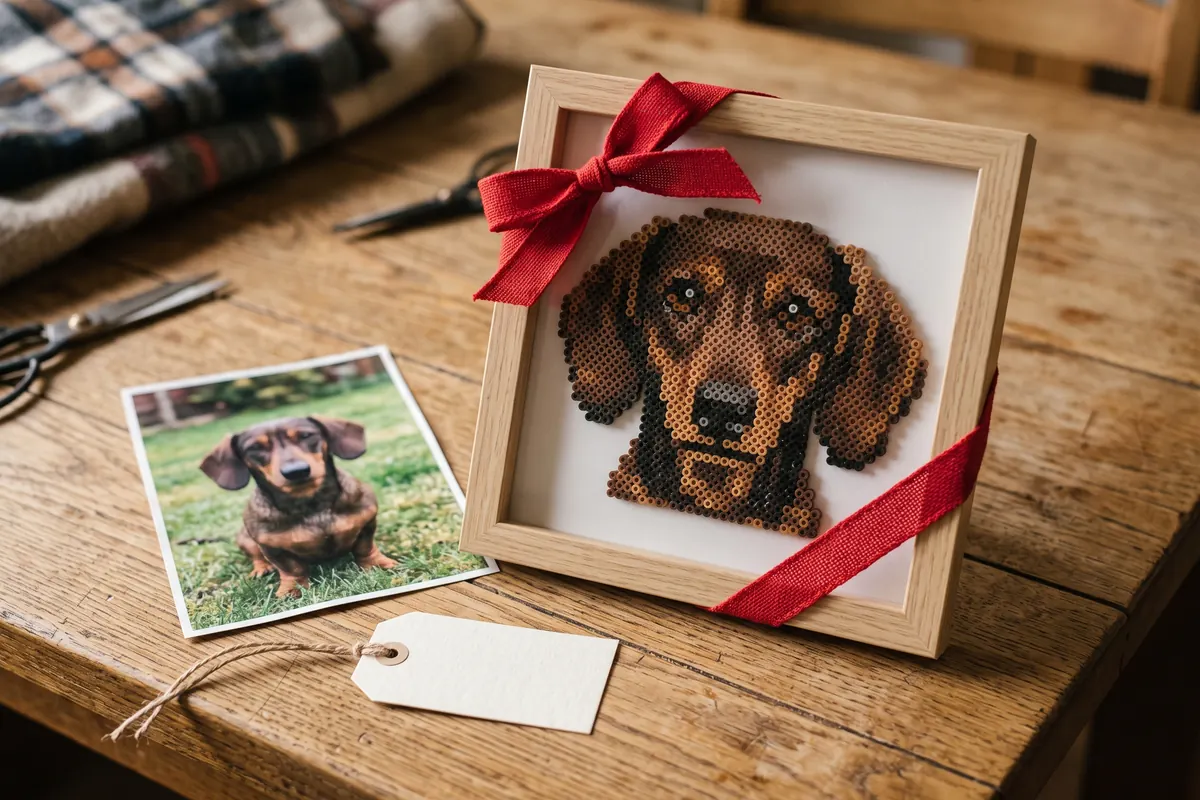
How to make a custom craft gift from a pet photo
A portrait of someone's dog or cat, made by hand from a photo they know, is a gift that gets kept. It works when the craft suits the person and the time you have, the photo is clear and the size gives the face enough room. Here is how to plan it, make it and frame it.
How many fuse beads do I need?
Count the coloured cells in your pattern, add a little spare and round up to the bags that shops sell. This guide shows how, with a worked example, and covers kits, single colours, pegboards and the other things you need.
Fuse bead problems and how to fix them
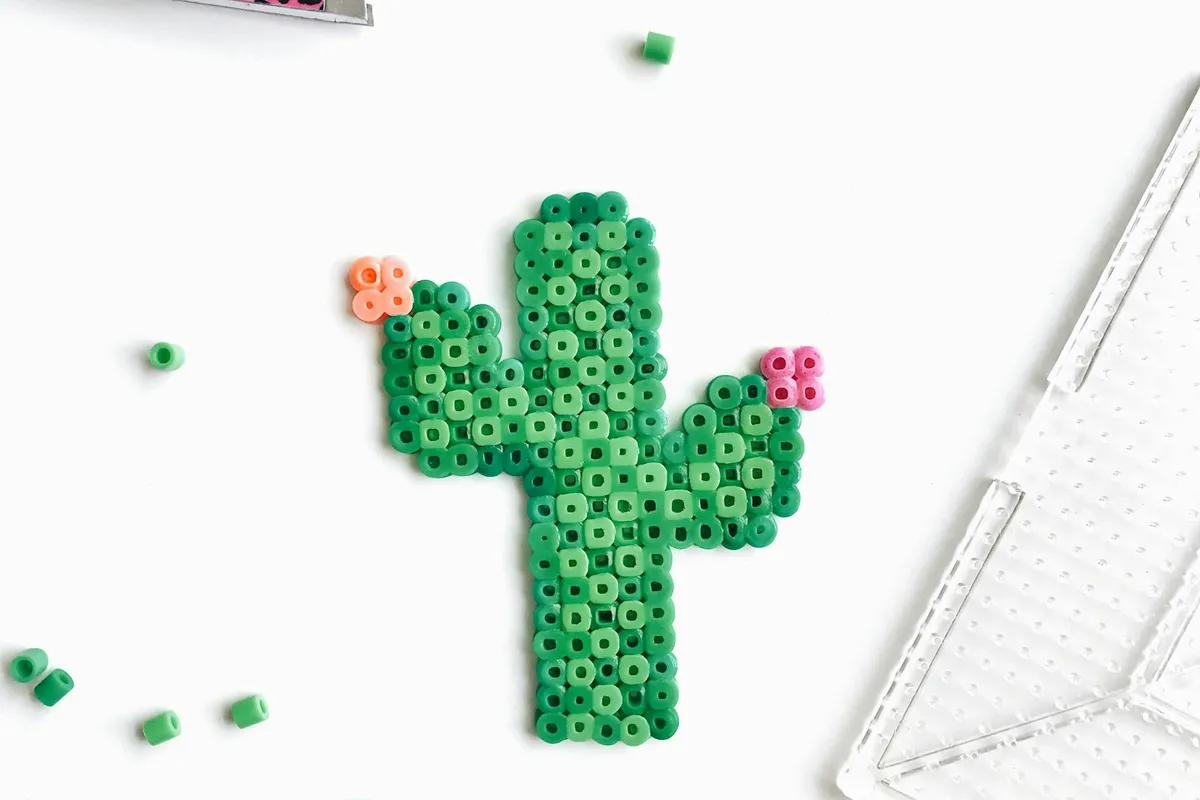
Most fuse bead problems come down to heat, pressure or moving the beads before they are fused. Below are the common ones, from beads that won't stick to a piece that curls or breaks, with what Hama and Perler say about each.
Hama, Perler and Artkal: what's the difference?
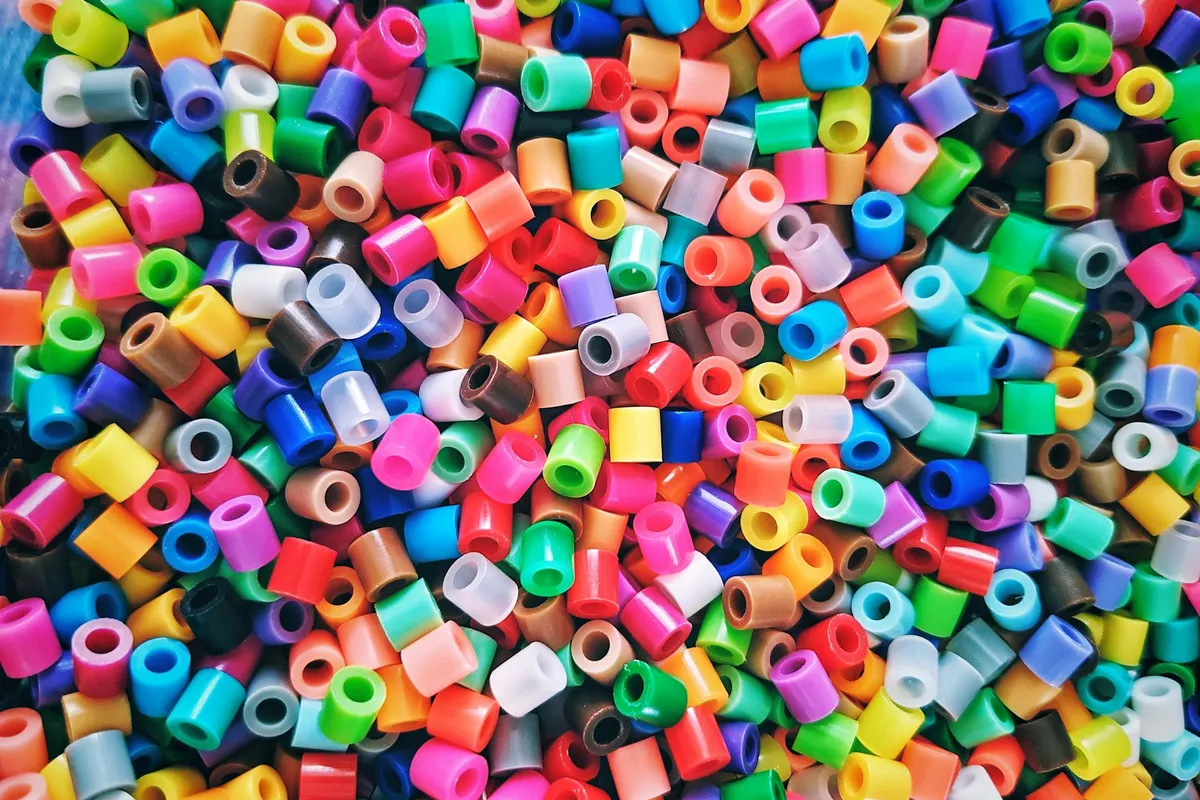
Hama, Perler and Artkal all make fuse beads you place on a pegboard and iron. Their standard beads are the same 5 mm size, but the brands differ in where they come from, which other sizes they make, how many colours they have and how they number them.
Mini, midi or maxi fuse beads: which size to choose
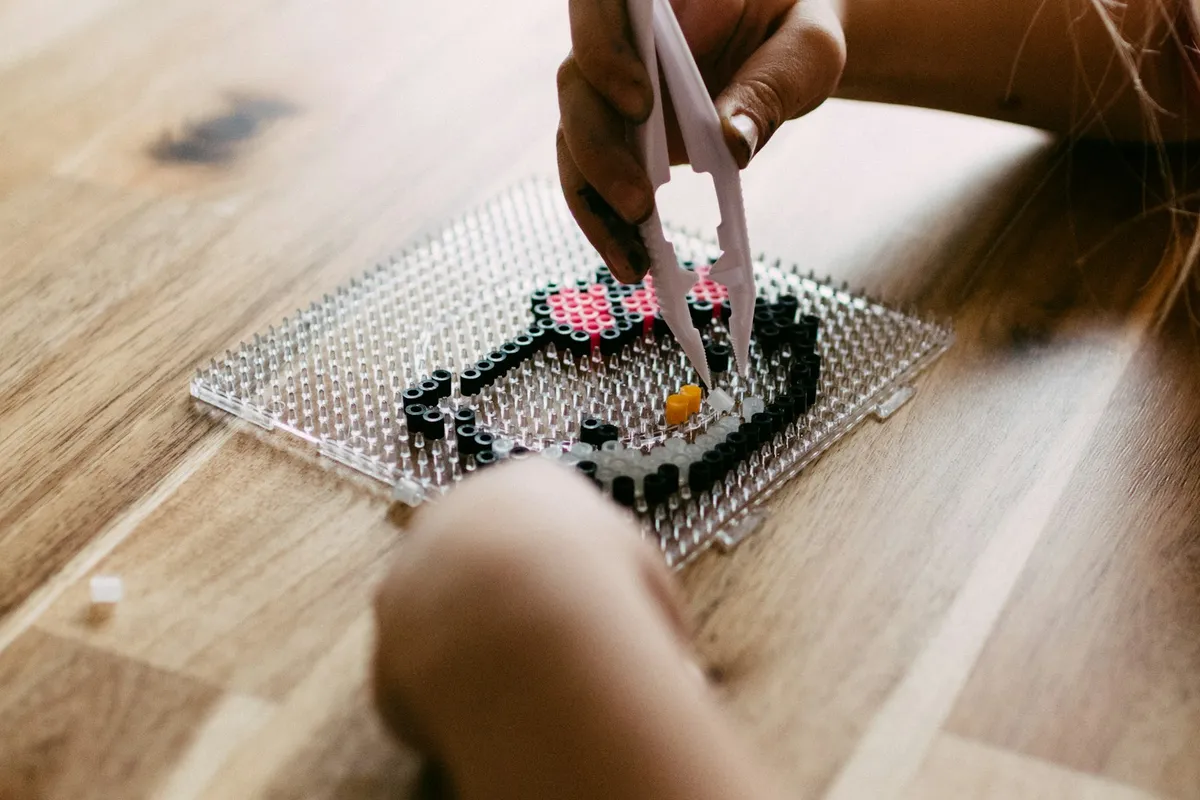
Fuse beads come in three sizes, and each has its own pegboards and its own age on the pack. Maxi beads are for small hands, midi is the size most patterns use, and mini beads are for fine detail. Here are the exact sizes for Hama and Perler and what each one is good for.
Fuse bead ideas through the year
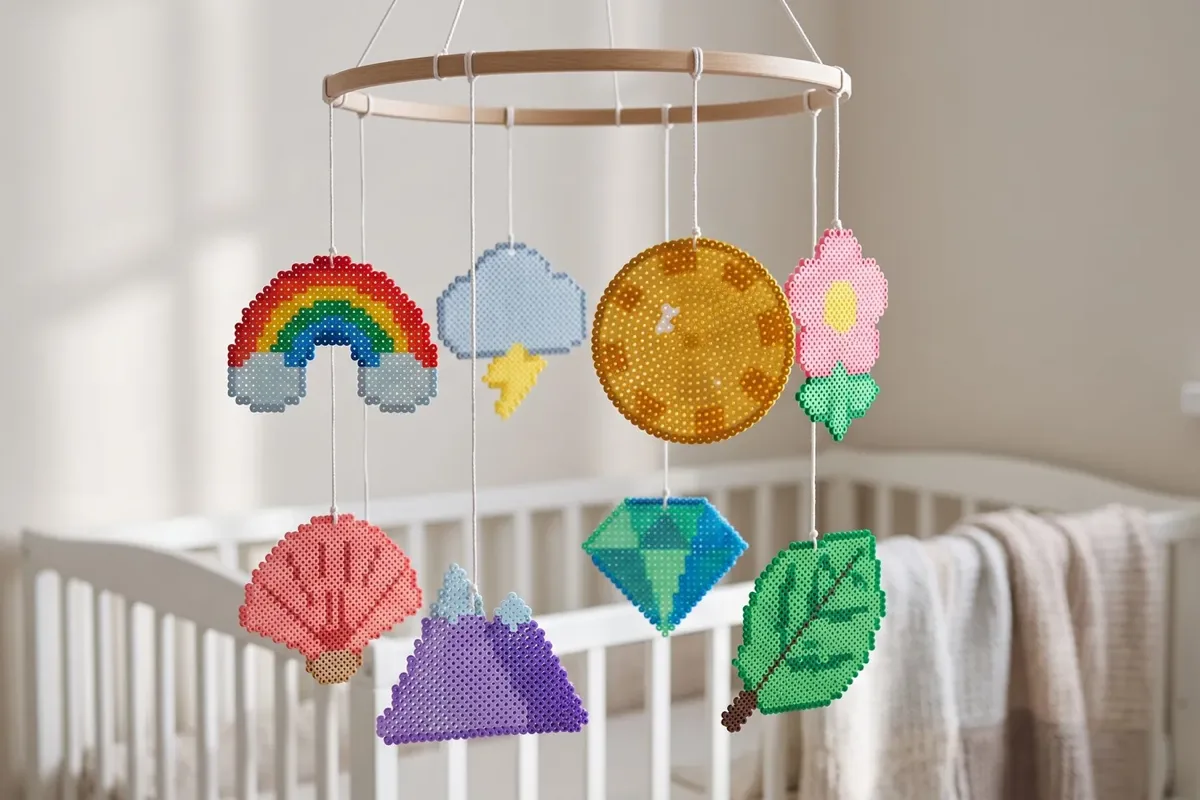
A calendar of fuse bead projects, from autumn leaves to Christmas ornaments, Easter chicks and back-to-school bag tags. For each season: a few concrete ideas, which colours to use, how to hang or attach the piece, and when to start.
3D Perler bead projects: how they work and how to start
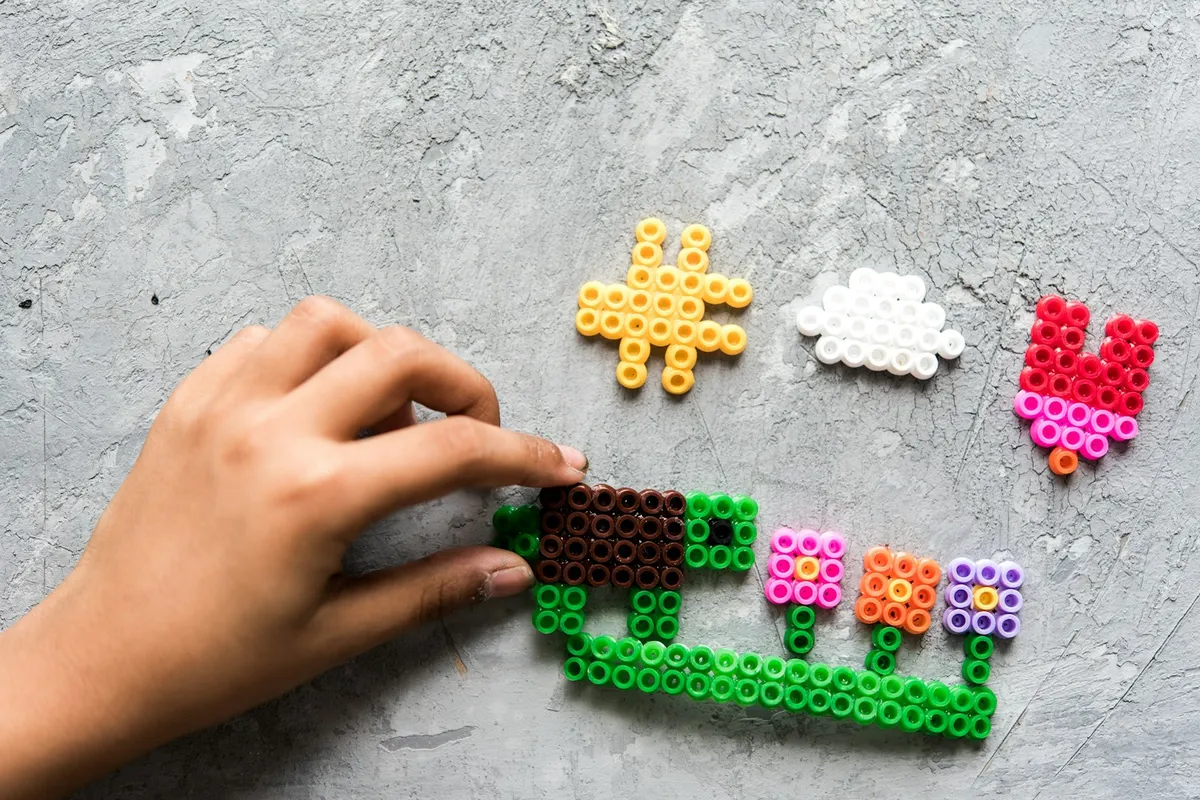
A 3D fuse bead project is a set of flat pieces that you iron separately and then stand up, slot together or glue. The trick is in the planning and the ironing: pieces that match exactly and holes that stay open. Here is how it works, with a box to start with.
How to make a cross-stitch pattern from a photo
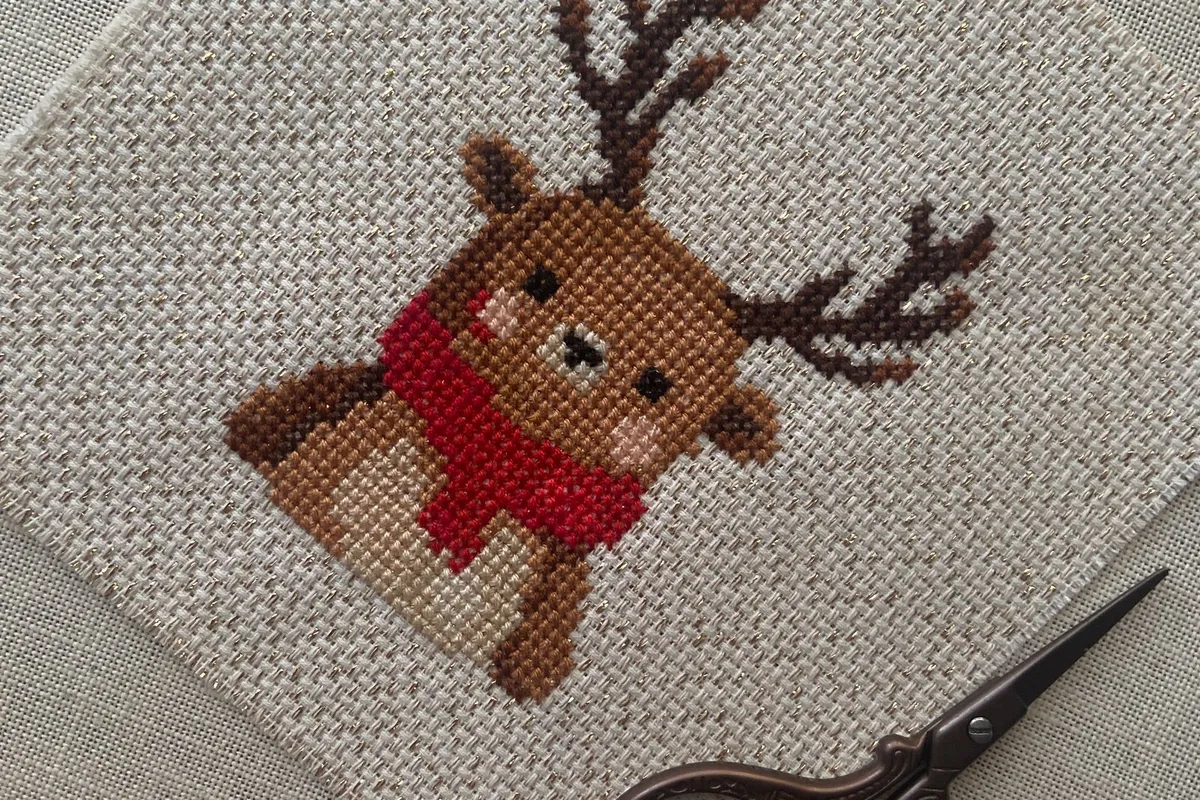
A photo becomes a good cross-stitch pattern when the subject is clear, the size suits the fabric and the colours are kept few. Here is how to choose the photo, work out the size on Aida, read the chart and buy the right floss, needle and hoop.
How to cross-stitch on a tote bag
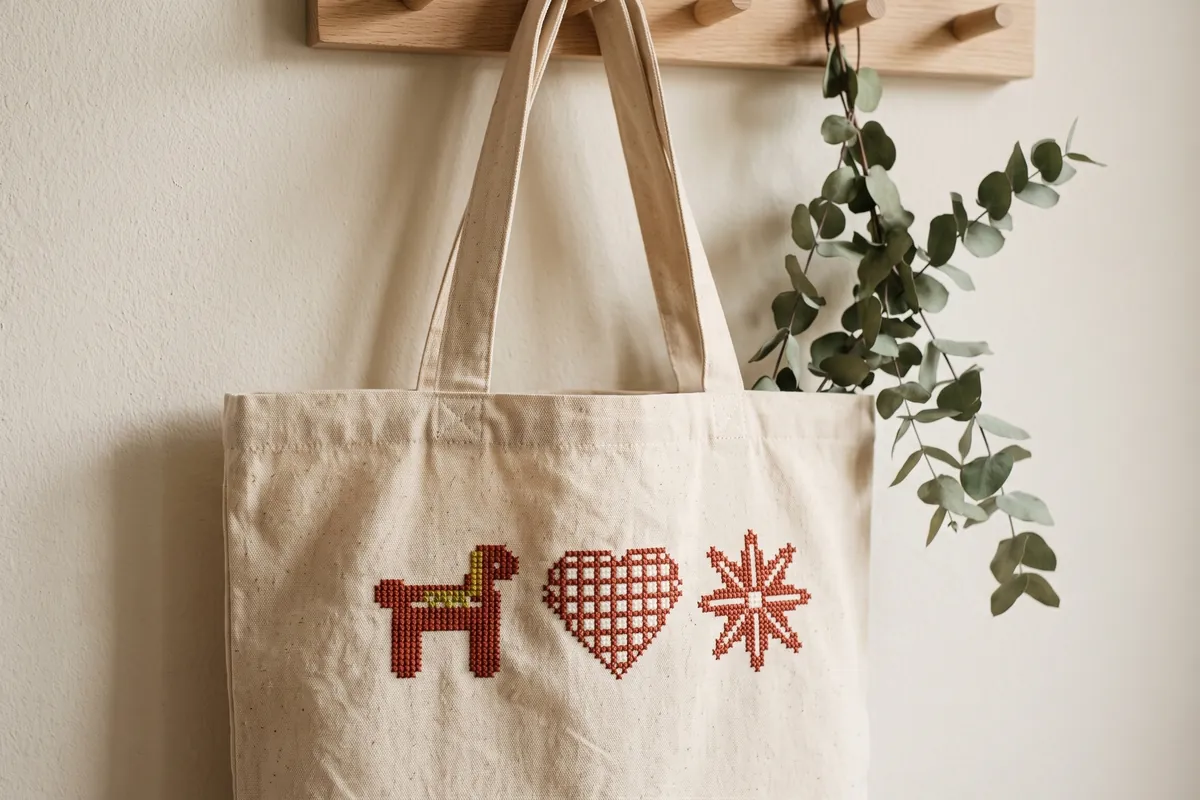
A plain cotton tote has no grid to count, so you stitch through waste canvas: a stiff, removable grid that you tack on, stitch through and pull out thread by thread when you're done. Here is what to buy, how big a motif comes out, and how to do it step by step.
How to customise a tote bag with fuse beads
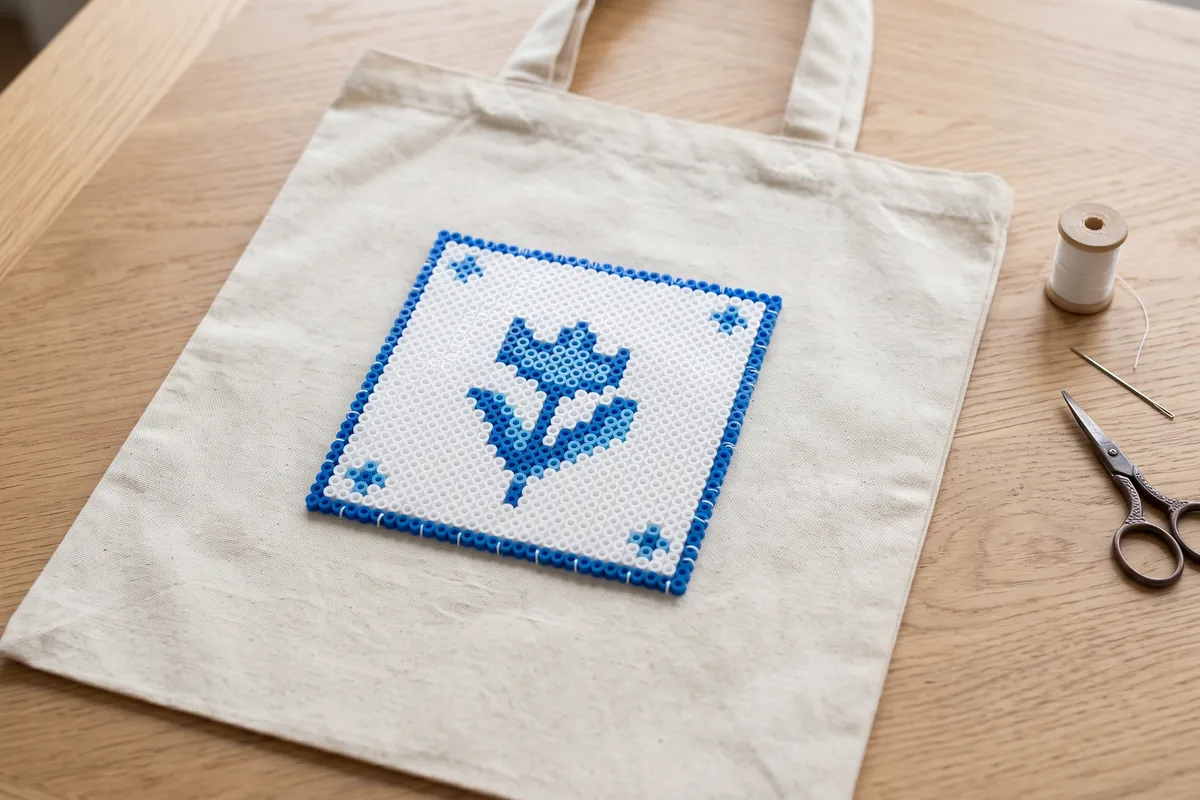
A fuse bead piece makes a bold, graphic patch for a plain cotton tote. You don't iron the beads onto the fabric: you make the piece on a pegboard, iron it lightly so the holes stay open, and sew it on through those holes or glue it. Here is how to pick the motif, make it and attach it so it stays on.
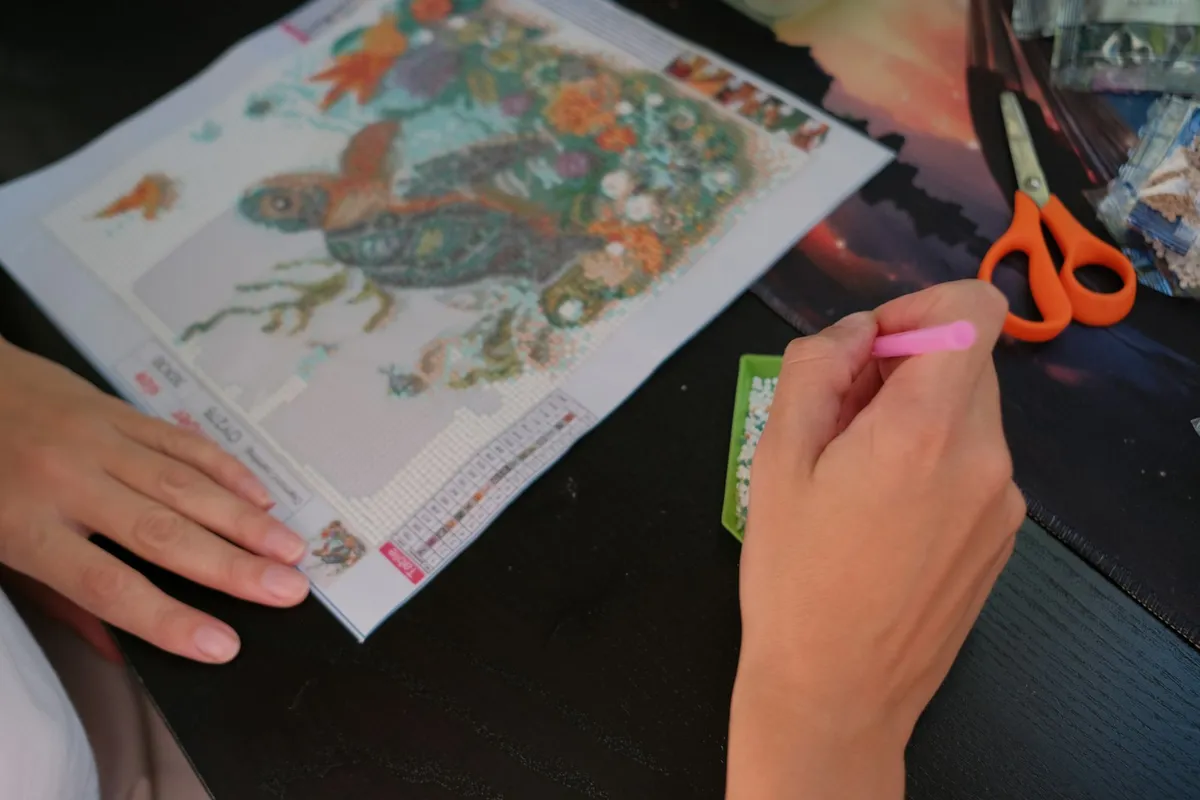
Diamond painting from your own photo
A diamond painting from your own photo works best with a sharp picture, a subject that fills the frame and a canvas big enough for the detail you want. Here is how to choose the photo and size, which drills and tools to use, and how to work through the canvas.
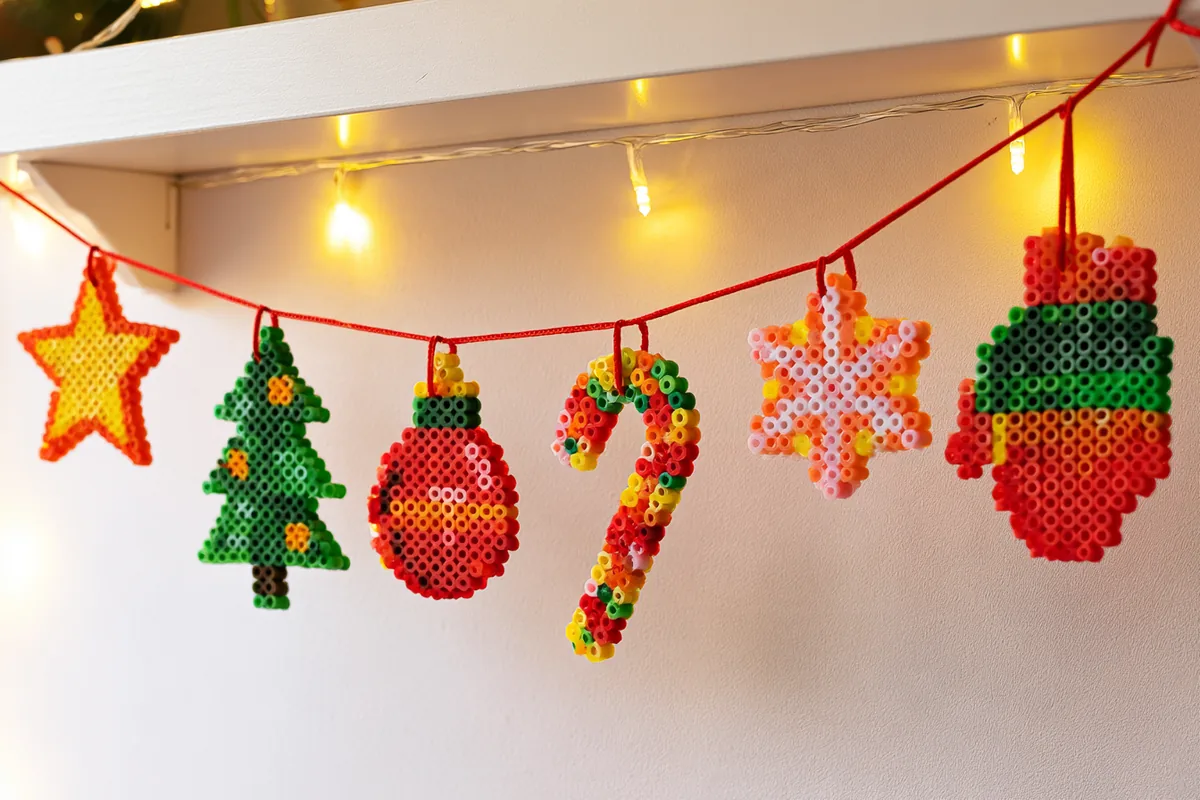
How to make fuse bead fairy lights
Fuse bead fairy lights are a string of LED fairy lights with a small ironed motif on every light: a star, a flower or a snowflake that glows when you switch it on. There are two ways to make one, and both start with the right lights. Here is what to use, how to leave a hole that fits, and which patterns work.
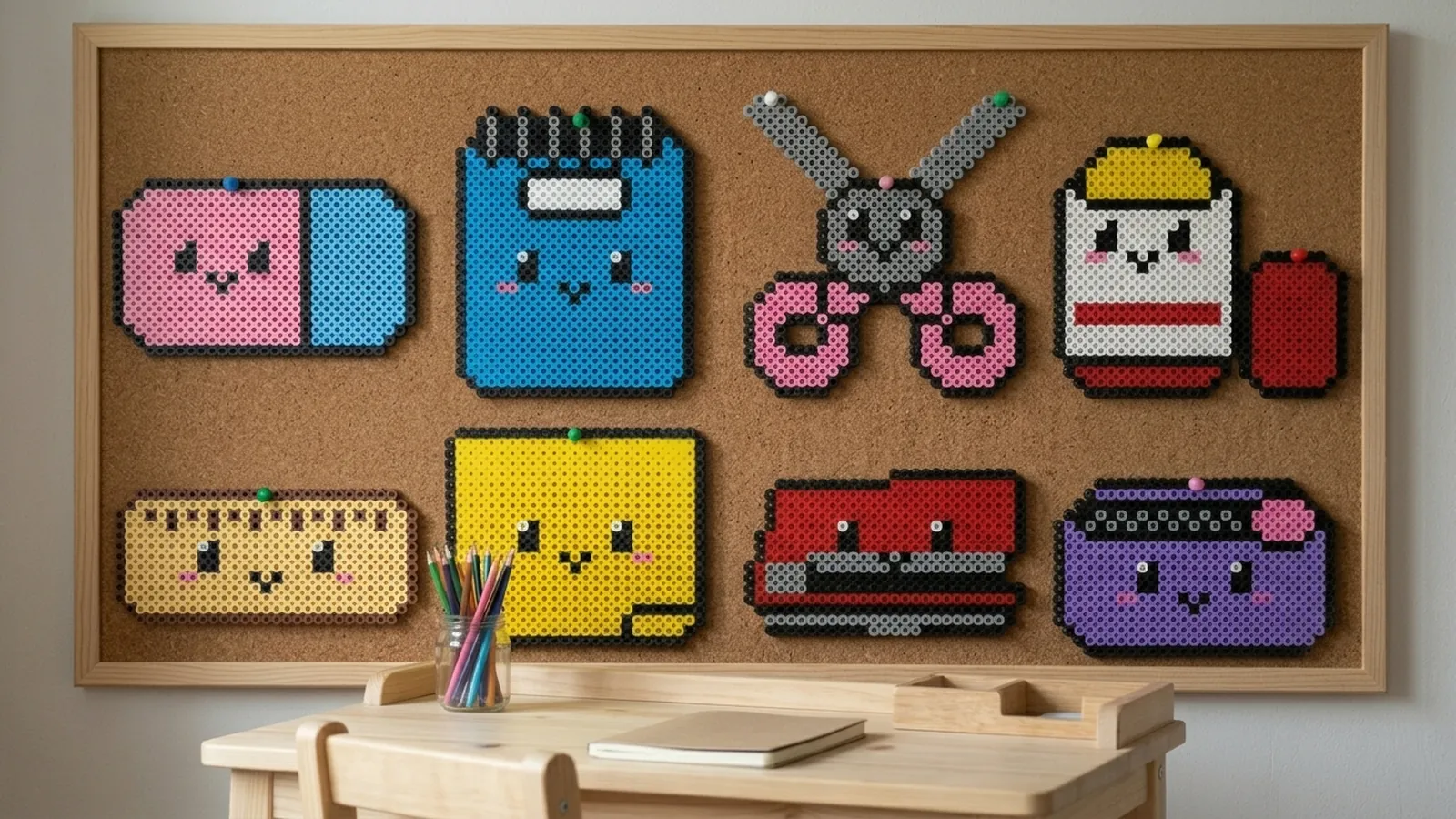
How to glue, hang and finish fuse bead pieces
Ironing joins the beads; this guide covers what comes after: a fridge magnet, a key ring, an ornament or a picture on the wall. Below: the glue that works on ironed beads, magnets, loops and hooks, mounting, and repairs. Glue does not replace the iron, though: why, and what to do instead, comes first.
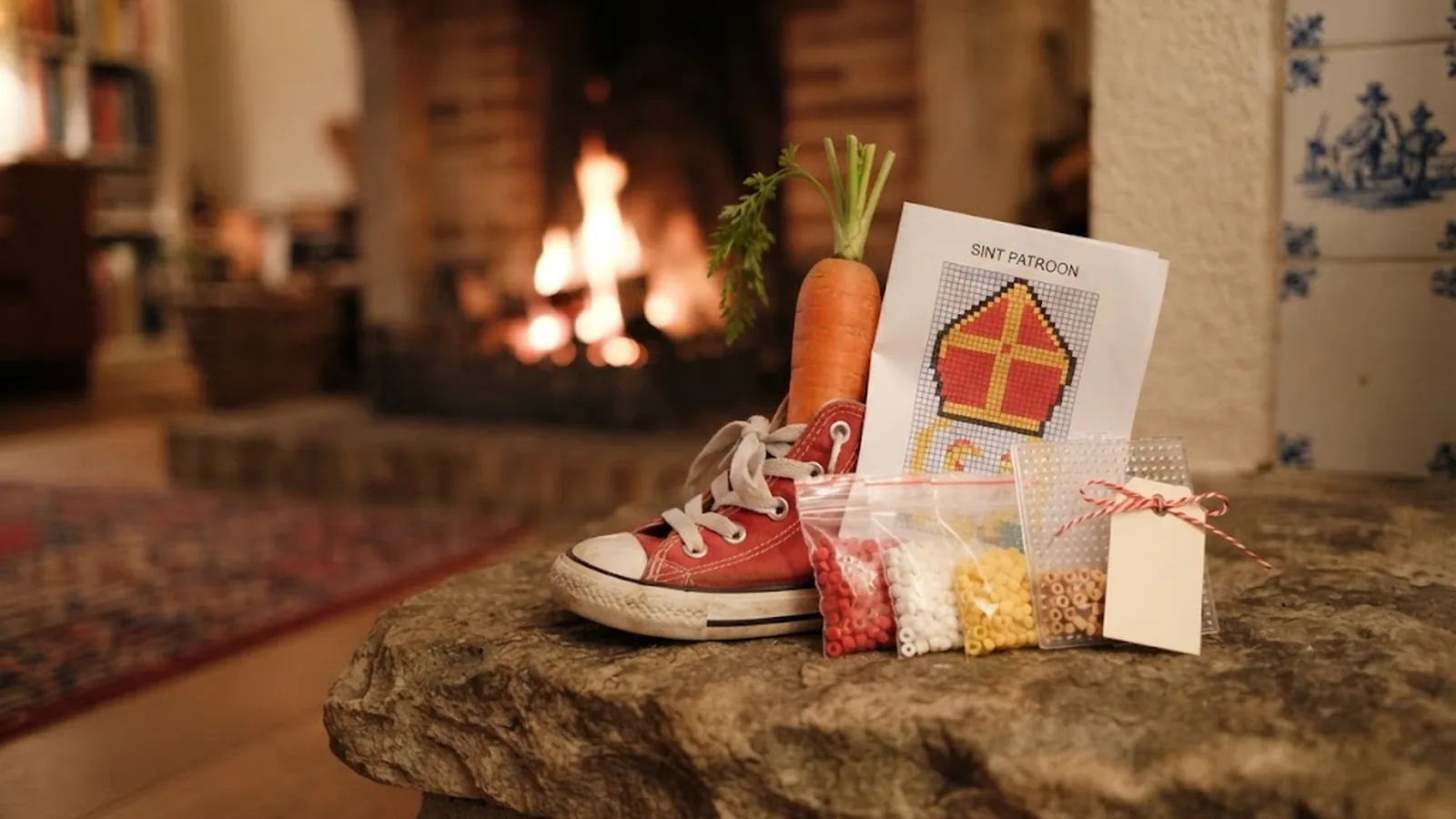
A bead kit in the shoe: Sinterklaas patterns by age
From Saturday 14 November 2026, when Sinterklaas arrives, until pakjesavond on 5 December, Dutch children put their shoe by the door or the fireplace; in Germany the boot goes out on the evening of 5 December. A small bead kit fits that shoe well: you print a pattern, count out the beads it needs per colour and put it all in the shoe. In the morning the child finds a project of their own to make, and an adult does the ironing. Below are patterns sorted by age, with the number of beads and colours for each, so you know how many to count out.
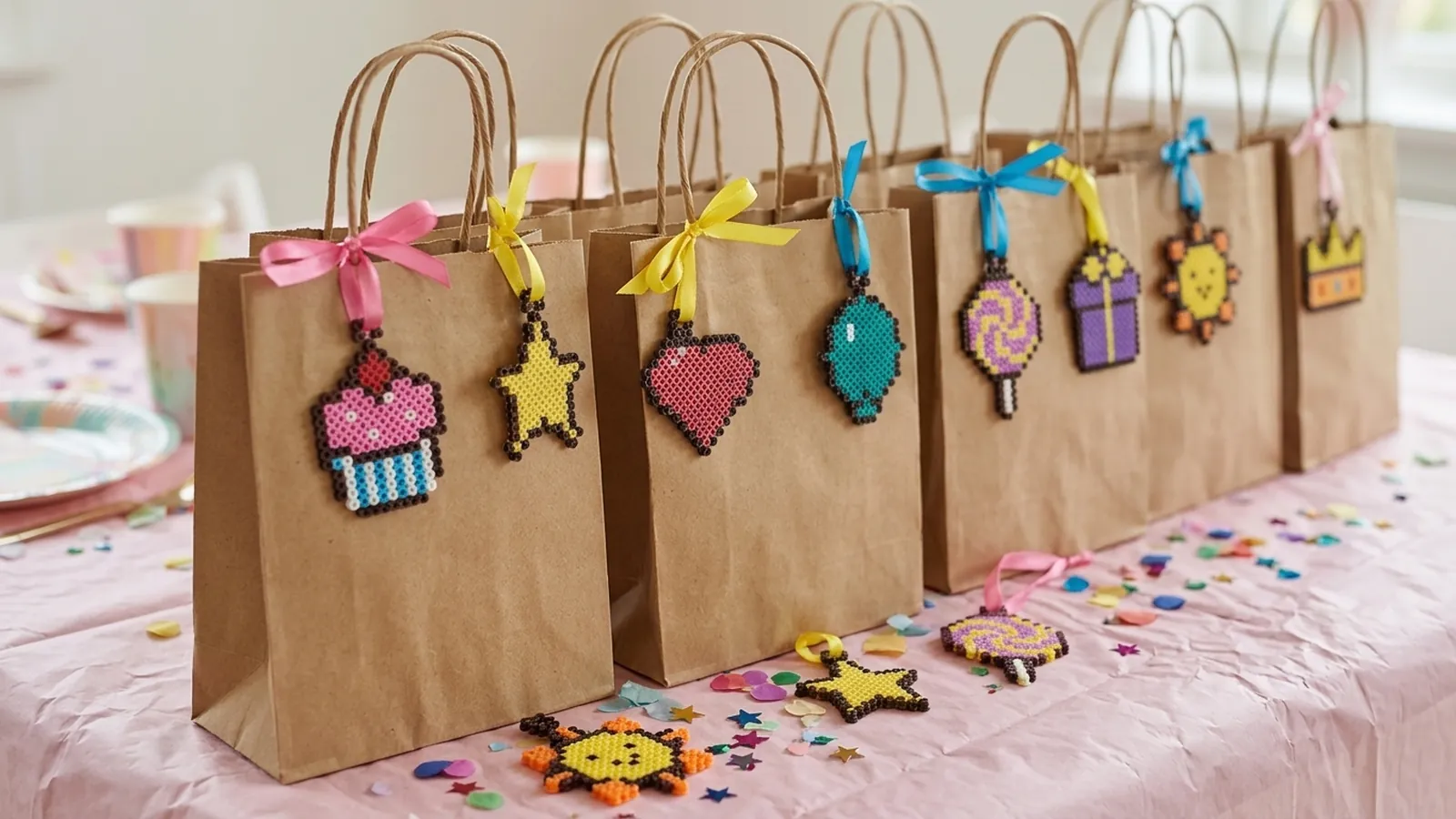
Party bag ideas without sweets or plastic tat
Most party bags hold sweets that are gone by bedtime and small plastic toys that break or get lost the same day. We made a different filler: one small fuse bead pattern with exactly the beads it needs. At home it keeps a child busy for half an hour, and once it is ironed it becomes a keyring, a bag charm or a fridge magnet they keep. Here is how it works, what it takes for a whole class, and what it costs.
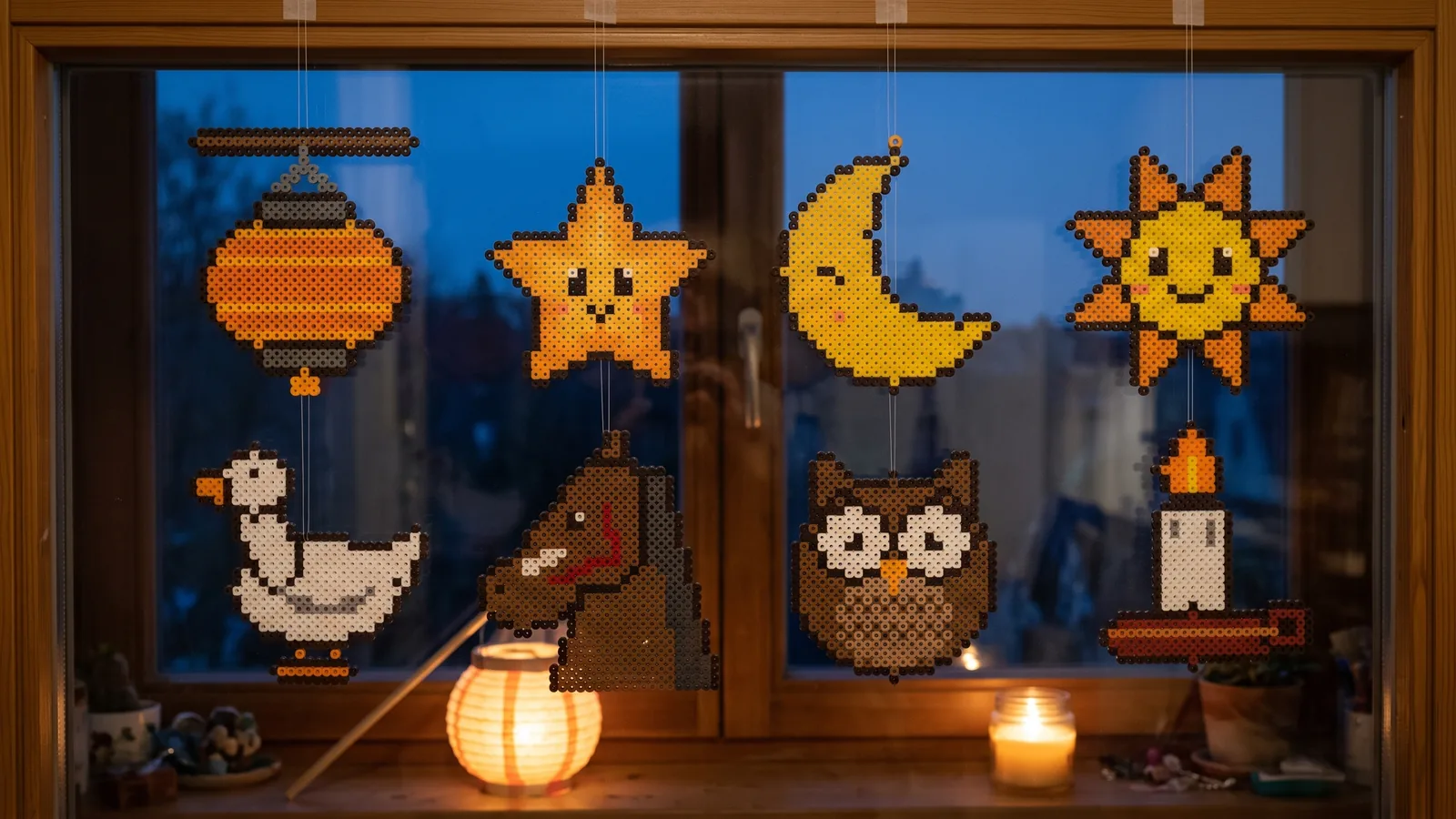
How to make a St Martin's lantern with fuse beads
A bead lantern looks lovely on the table, but on 11 November children want to carry it through the dark. With a sheet of card, some transparent paper, a piece of wire and a battery lantern stick, the ironed bead piece becomes the window of a real lantern that glows. Here is the whole build, what to buy, and the one rule that matters: light it with an LED, never a candle.
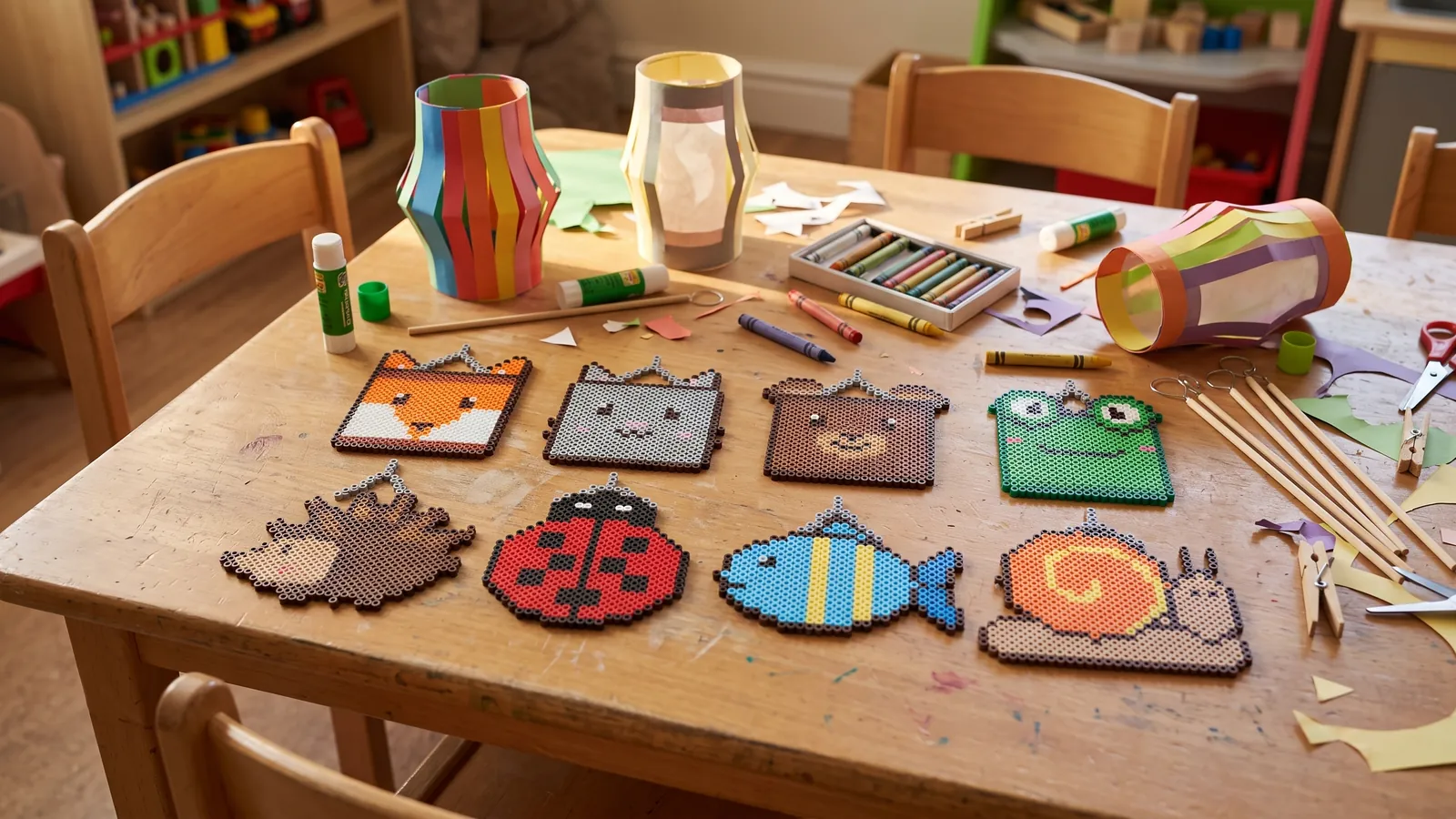
St Martin with kids: 9 fuse bead patterns by age
St Martin's Day is Wednesday 11 November 2026, and the week before is when lanterns and treats come out of the craft box. Not every pattern suits every child: a five-year-old wants a shape with few colours that is finished before bedtime, a nine-year-old wants a scene to be proud of. Here are nine of our St Martin patterns sorted into three age groups, with the number of beads and colours for each, so you can pick one that gets finished.
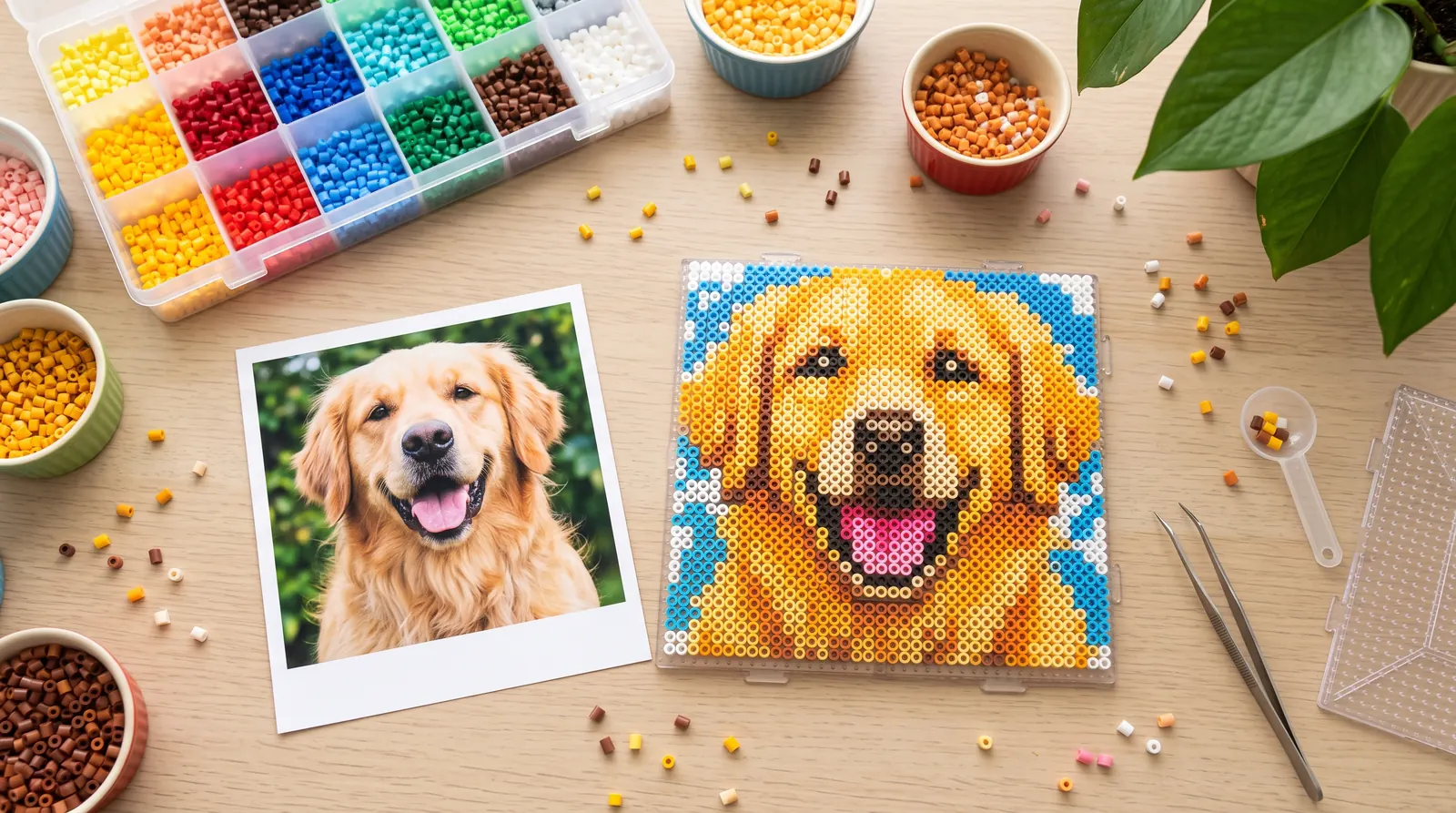
Kippadoo vs free pixel art converters: what a bead pattern needs
A pixel art converter is a website or app that turns a picture into a grid of coloured squares. That grid is the start of a fuse bead pattern, but not all of it: to make the piece you also need colours that exist as beads, a count per colour, and a print that matches your pegboard.
Kippadoo vs pattern books: a ready-made design or your own photo
A pattern book is a printed collection of ready-made designs for fuse beads, cross-stitch or another craft, picked and drawn up by someone else. Kippadoo makes the pattern from a photo you choose. The two answer different wishes: "something nice to make" or "this picture, in beads".
Kippadoo vs Stitch Fiddle: which one for a pattern from your photo?
Stitch Fiddle is an online chart editor where you draw patterns for knitting, crochet, cross-stitch, fuse beads and several other crafts, square by square. Kippadoo is made for one job: turning your photo into a fuse bead, cross-stitch, diamond painting or LEGO DOTS pattern you can print and follow. Which one fits depends on whether you want to design a chart yourself or start from a photo.
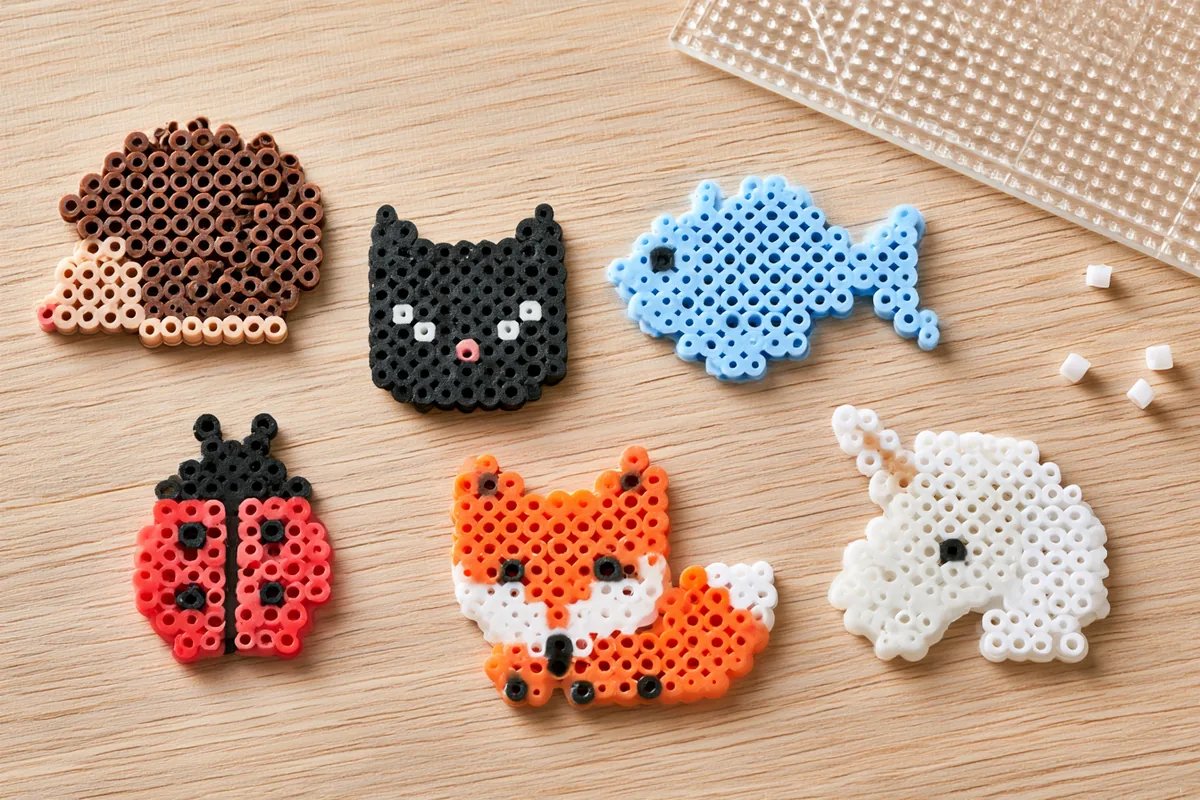
Animal fuse bead patterns children can make
Animals are the first thing most children want to make with fuse beads, and the easiest ones share a few traits: a shape you recognise from the outline alone, two or three colours and one bead for the eye. Here are nine animals in order of difficulty, from a fish to a unicorn, with the colours, the part that usually goes wrong and a tip for each. At the end: how to turn your own cat or dog into a pattern.
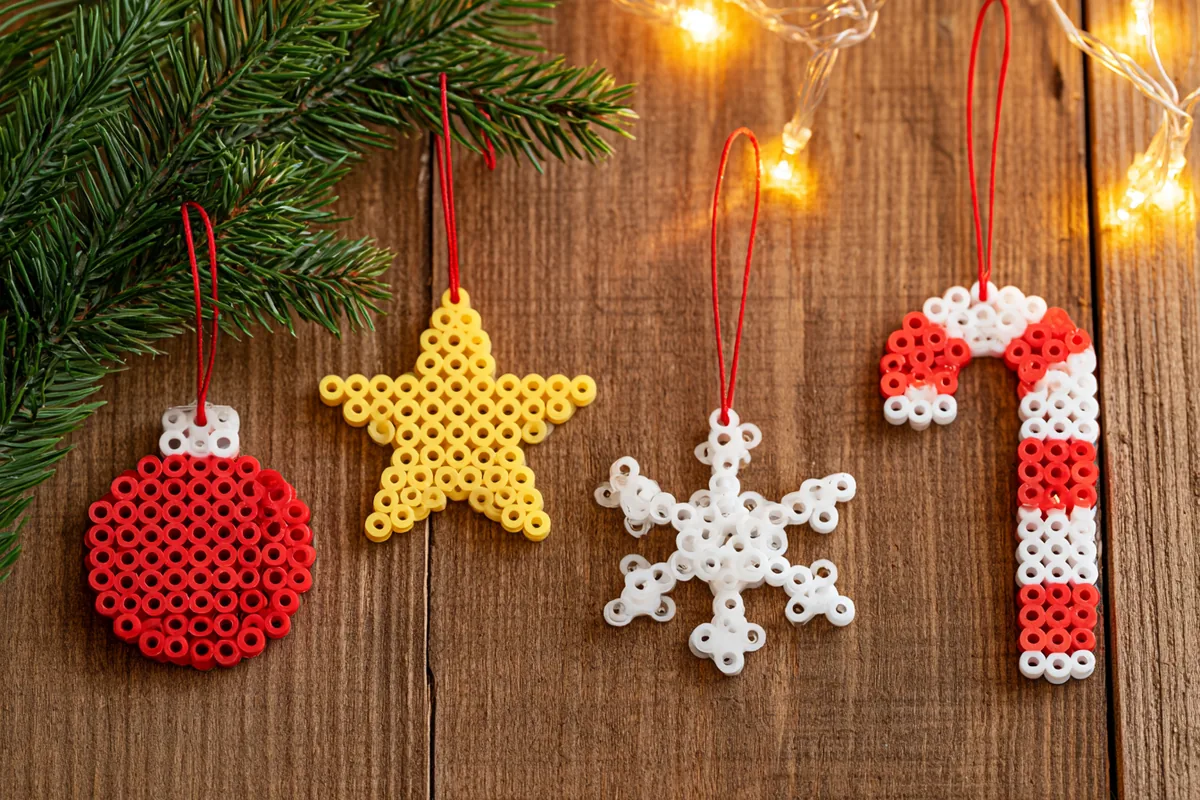
Christmas fuse bead ideas: ornaments, an advent calendar of patterns and gifts children can make
December is when most fuse bead pieces are made, and most of them are given away. Below are ornaments that hang straight, a plan for making one small pattern a day through Advent, gifts a child can finish in an afternoon, a star for the top of the tree, and how to pack it all so it comes out whole next year.
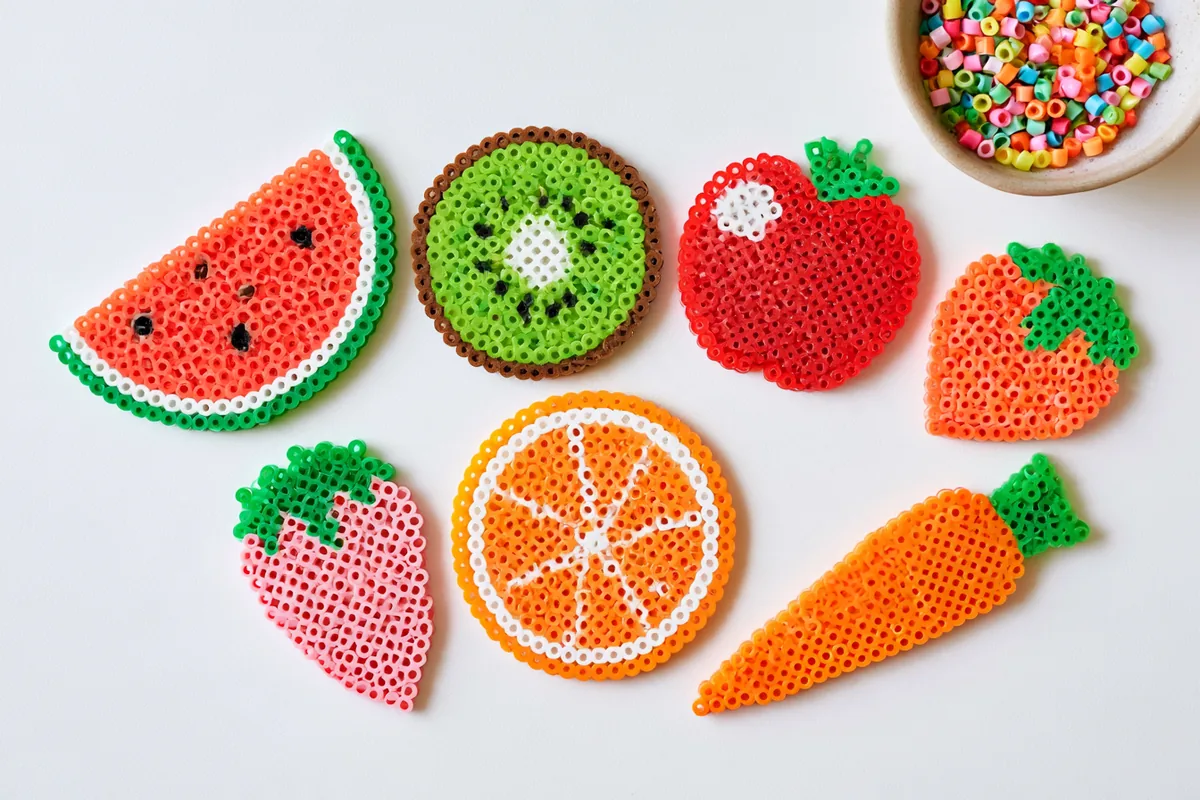
Fruit and vegetable fuse bead patterns: watermelon, kiwi, apple, pumpkin and play food
Fruit is the easiest thing to make in fuse beads: the colours are obvious, the shapes are round and a slice is just a half circle. Here is how to make a watermelon slice, a kiwi, an apple, a strawberry, a pumpkin, a tomato and a carrot, what goes wrong with seeds, and how the pieces turn into play food for the toy kitchen, a garland or a set of fridge magnets.
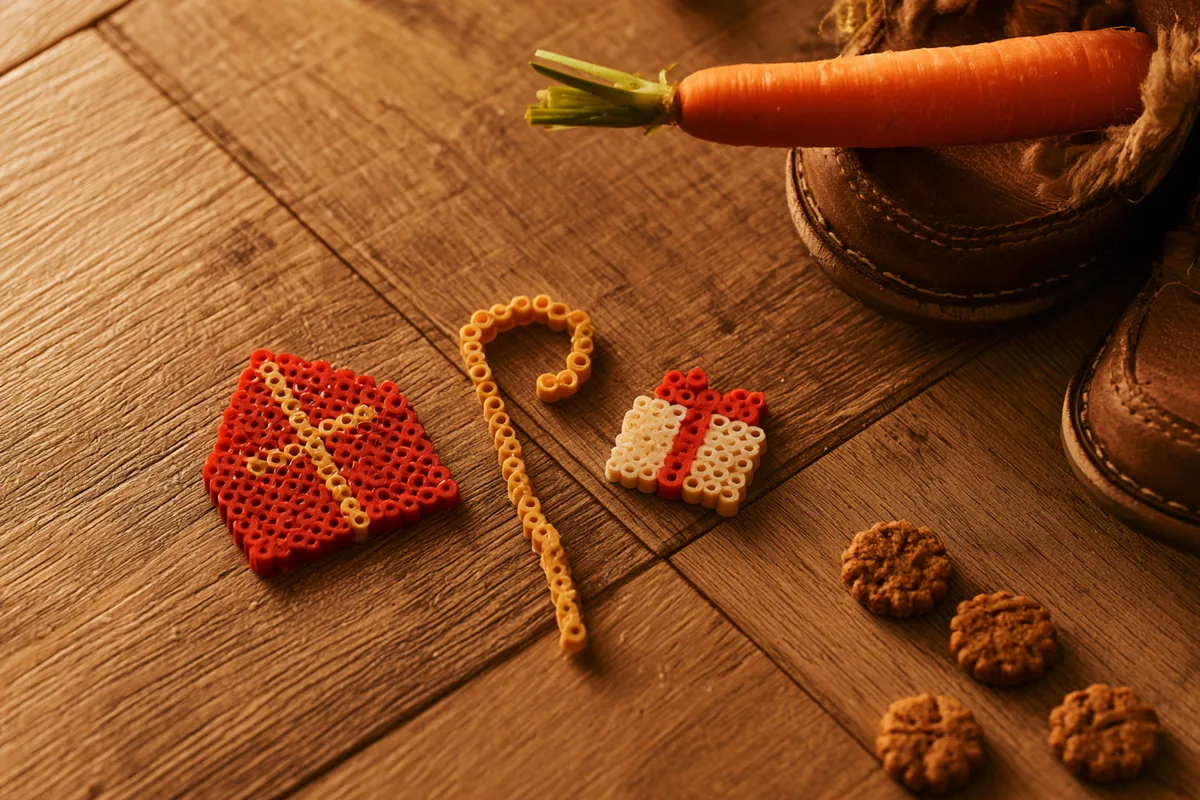
Sinterklaas and St Nicholas fuse bead ideas
In the Netherlands presents come on the evening of 5 December, in Germany a filled boot waits on the morning of 6 December. Both days have their own set of shapes that fit on one pegboard: a red mitre, a gold staff, a steamboat, a pepernoot, a shoe with a carrot in it, a chocolate letter and a wrapped present. Here is how to build each one, what the pieces are for, and when to make them so they are ready in time.