St Martin with kids: 9 fuse bead patterns by age
St Martin's Day is Wednesday 11 November 2026, and the week before is when lanterns and treats come out of the craft box. Not every pattern suits every child: a five-year-old wants a shape with few colours that is finished before bedtime, a nine-year-old wants a scene to be proud of. Here are nine of our St Martin patterns sorted into three age groups, with the number of beads and colours for each, so you can pick one that gets finished.
Updated 3 November 2026
How we sorted them
Every pattern below fits on one 29 × 29 square pegboard with ordinary 5 mm beads (Hama Midi, Perler). What makes a pattern harder is not the size but how many beads there are and how many colours a child has to keep apart. Fewer than 350 beads and four or five colours is a good first project; 550 beads or more in six colours is a project for an afternoon.
The ages are a rough guide. Some five-year-olds will happily do a goose, some nine-year-olds want a quick star. Our guide on what age suits fuse beads explains the bead sizes; an adult does the ironing at every age.
From 5: a first St Martin pattern
Short and clear: a big shape, few colours, and a piece that is ironed and hanging up the same evening.
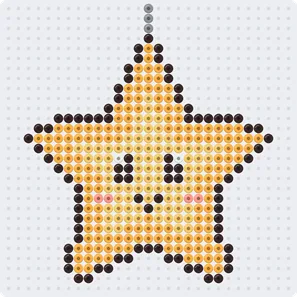

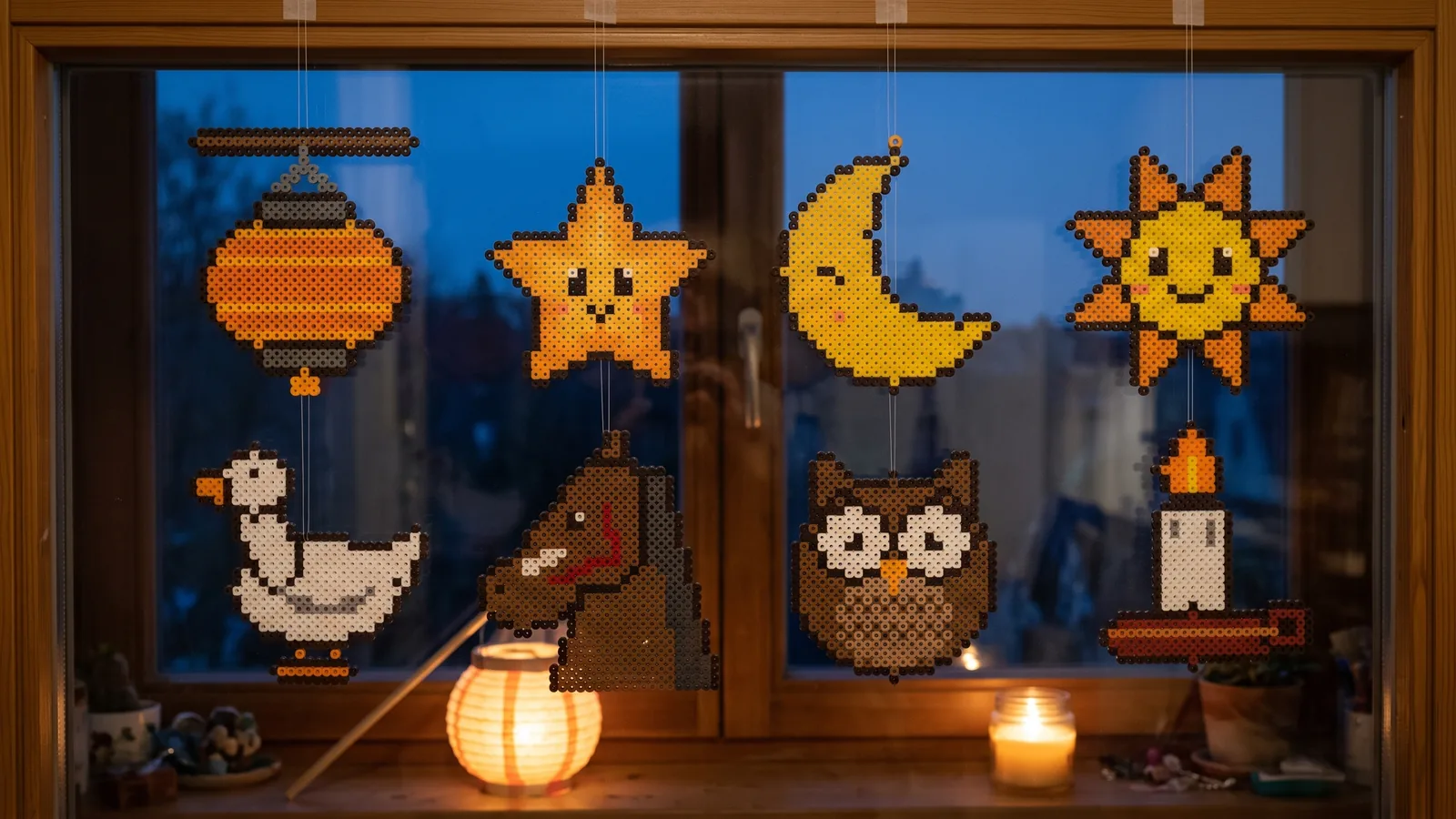
- Star lantern: 325 beads, 6 colours, free to print. A smiling star with a handle: the colours sit in big areas, so it is easier than six colours sounds.
- Moon lantern: 314 beads, 5 colours. A sleepy crescent moon; mostly yellow, so it fills quickly.
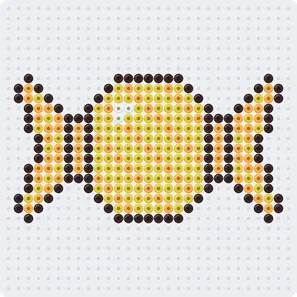
- Toffee: 297 beads, 4 colours. A wrapped sweet, the treat from the door. The fewest colours of the nine.
From 7: animals and treats
More beads, a few more details such as eyes, a beak or a bow, and still a shape that is clear from across the room.
- Goose: 339 beads, 4 colours. The goose from the St Martin legend: white, with an orange beak and feet. Few colours, but the neck needs care.
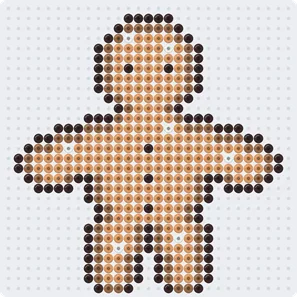
- Weckmann: 390 beads, 4 colours, free to print. The bread man baked for St Martin in the Rhineland, with raisin eyes and buttons. Mostly two browns.
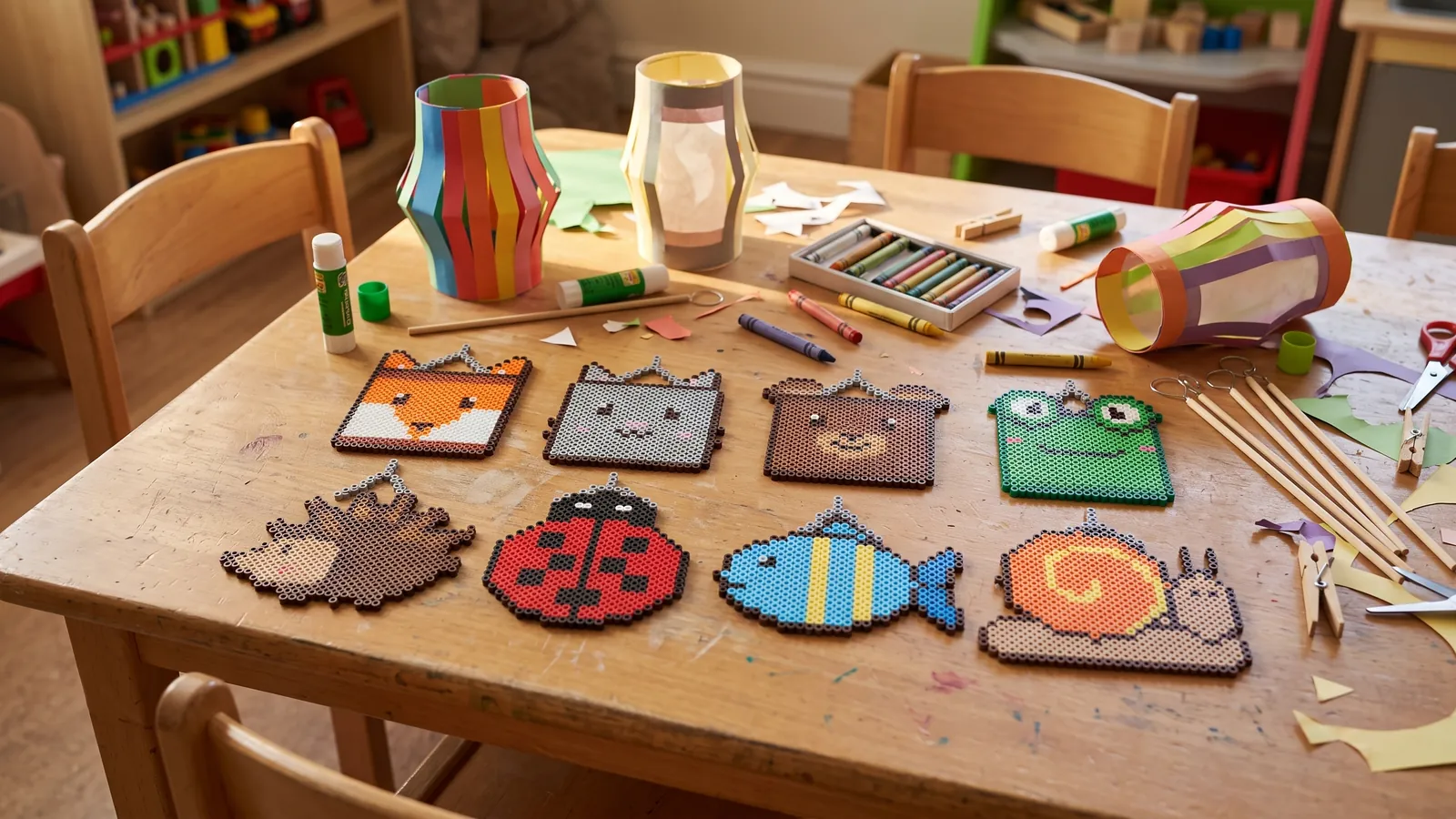
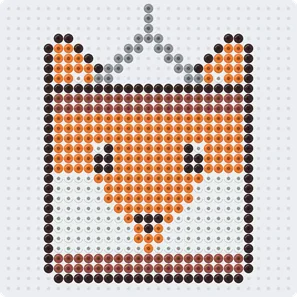
- Fox lantern: 484 beads, 5 colours, free to print. An orange fox face with white cheeks and a handle; the ears are the fiddly part.
From 9: a scene to be proud of
Six colours, more than 550 beads and shapes that only work when every bead is in the right place. Good for an afternoon, or for two children working on one board.
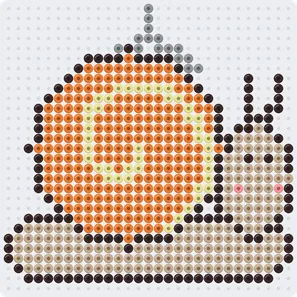

- Snail lantern: 550 beads, 6 colours. A snail whose spiral shell is the lantern; the spiral is the challenge.
- Front door: 627 beads, 6 colours. The door children knock on, with its fanlight, letterbox and step.
- Lantern walk at night: 657 beads, 6 colours. The most beads of the nine: a row of lanterns on the grass under the moon and stars.
Making it a real lantern
Any of the lantern patterns can become the window of a lantern a child can walk with: a card tube, transparent paper behind the window, a wire handle and a battery lantern stick. Never a candle, because the beads are plastic. Step by step in how to make a St Martin's lantern with fuse beads.
All St Martin packs
The nine patterns come from five packs with eight patterns each: St. Martin, Animal lanterns, Shaped lanterns, Door to door on St. Martin's and Martinsfest. One pattern in every pack is free to print; the printed pattern lists every colour code and how many beads you need.
Sources
- Hama UK, Hama bead sizes: the ages on the packs are a guide; Midi from 5.
Questions
The toffee: 297 beads in four colours. The moon lantern and the free star lantern are next, at just over 300 beads.
Yes: the star lantern, the Weckmann and the fox lantern are free to print with a free account. One pattern in every Kippadoo pack is free.
Yes, and it works best with the bigger scenes. One builds the outline, the other fills in; an adult irons it.
The weekend before St Martin's Day, 7 and 8 November 2026, leaves time to iron, cool and turn a lantern pattern into a real lantern before Wednesday 11 November.