What age can children start with fuse beads?
The short answer: from about 3 with the big Maxi beads, from 5 with the normal 5 mm beads, and from 10 with mini beads. The longer answer depends less on the age on the box than on what your child's fingers can do and how long they can sit. Here is what the makers say, what each age can really manage, and the jobs that stay with you.
Updated 28 October 2026

What age are fuse beads for?
The age for fuse beads follows the bead size, and there are three sizes: Hama puts Maxi at 3+, Midi at 5+ and Mini at 10+. A bigger bead is easier to pick up and push onto a peg, and too big to swallow.
- Maxi, 10 mm: from 3. Hama says its Maxi beads are meant for the smallest children. Hama UK recommends them for ages 3 to 4 and says young children must always be supervised with them.
- Perler Biggie Beads: from 4. Perler's large beads are sold for ages 4 and up.
- Midi, 5 mm: from 5. The normal size, the one most patterns are made for. Hama gives 5+ on its Midi beads and pegboards. Perler sells its classic beads and kits for ages 6 and up.
- Mini, 2.5 mm: from 10. Hama says 10+, and adds that mini beads are sometimes too fiddly even for adults.
Hama UK says the ages on fuse bead packs are a guide, not a rule, and that what matters is the child. That matches what parents see: one five-year-old finishes a pegboard in an afternoon, another loses interest after ten beads. The size guide explains the three sizes in detail: mini, midi or maxi.
Are fuse beads a choking risk?
Yes, for children under three: a 5 mm bead is a small part. Under the EU toy safety rules, toys with small parts that are not meant for children under three carry the warning you will find on every pack of midi beads: not suitable for children under 36 months. The risk is not the bead on the board, it is the handful that rolls under the table and gets found by a younger sibling.
- Under 3: only Maxi beads, and only with you at the table.
- A toddler in the house: keep midi beads in a box with a lid, do the activity at a table the toddler cannot reach, and sweep the floor afterwards. A bead tray with a rim helps.
- Nothing in the mouth, also for the older child: beads are plastic and are not made to be chewed.
What each age can actually do
Around 3: sorting and the first Maxi beads
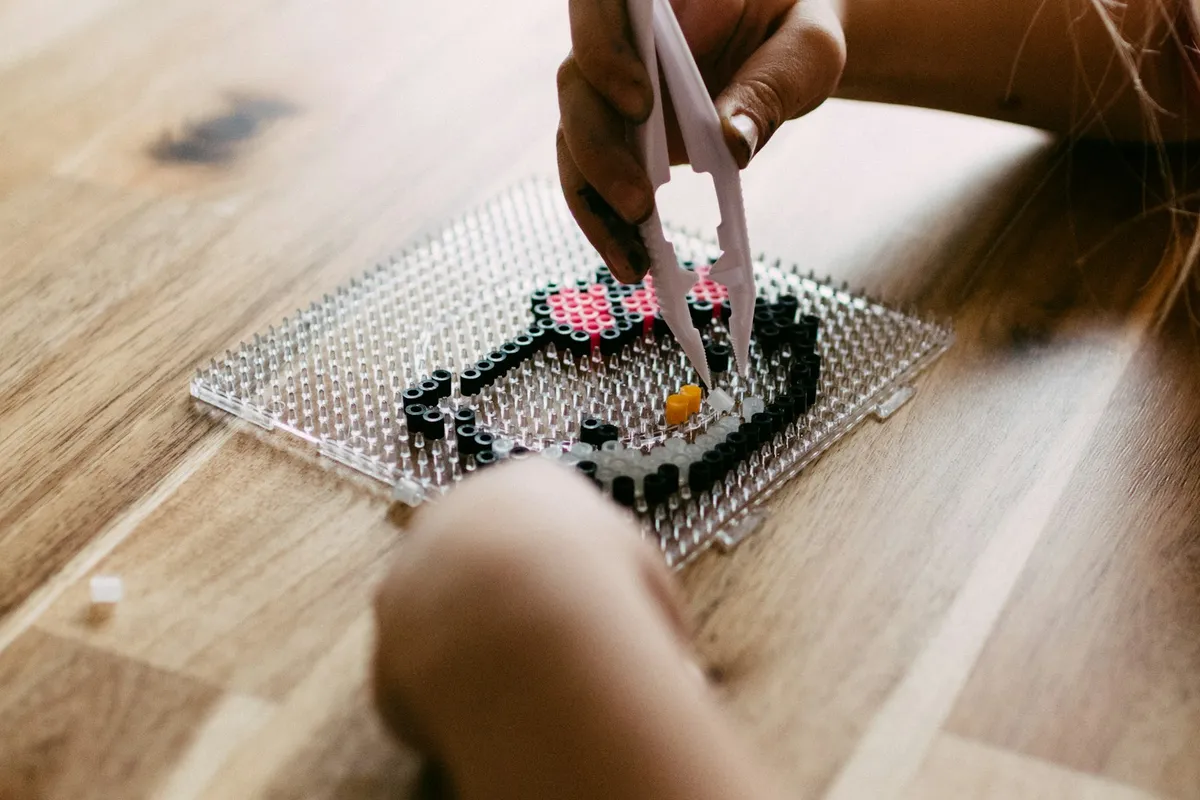
Around age 3, the activity is the beads themselves. Sorting a handful by colour into the sections of a tray is a game. On a Maxi pegboard a three-year-old can push beads on in no particular order and be proud of the result. Expect a few minutes, not a project. One colour, or whatever colour comes next, and no pattern.
4 to 5: shaped boards and two colours
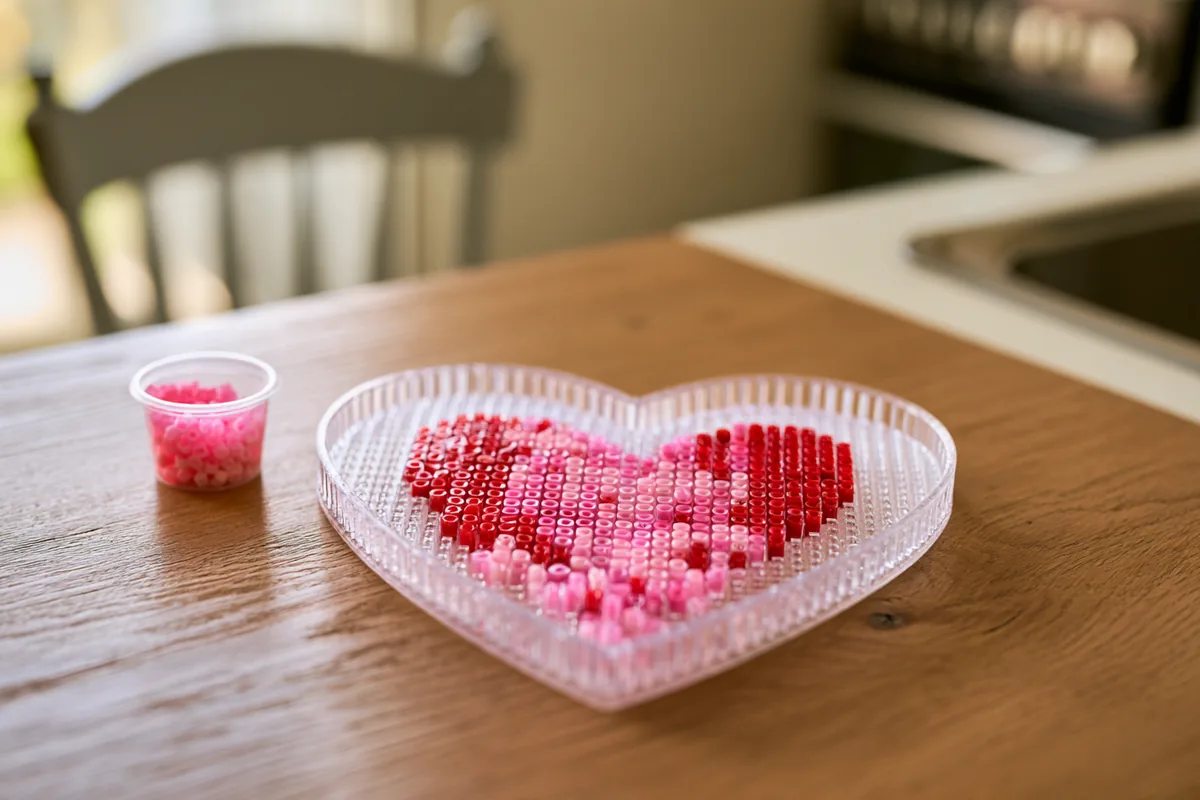
By 4 to 5 the pincer grip is there and the midi beads become possible, if the child has the patience. The easiest start is a shaped pegboard, such as a heart or a star: the edge is given, the child only fills it in. Two colours in stripes or rings is enough. Ten to twenty minutes is a good session; stop while it is still fun. A full square board is a lot at this age, so choose the small boards.
6 to 8: a first pattern on one board
Six to eight is the age most pattern packs are made for. A child can follow a printed pattern, count beads along a row and correct a mistake. One 29 × 29 pegboard is the right size: big enough for a pumpkin, a cat or a rocket, small enough to finish in one or two sittings. Simple shapes with few colours work best, and children start to want their own ideas: a name, a flag, the family dog. Easy fuse bead ideas has a list by theme.
9 and up: bigger pieces, mini beads, own designs
Older children can work across several boards, plan the colours and keep going over days. Mini beads become an option for those who like detail. A portrait from a photo is a good project at this age: Kippadoo's pattern maker turns a photo into a bead pattern with every colour and count, and the child does the rest. Start with one board; a 2 × 2 is the next step.
What the hobby gives them
What fuse beads give a child needs no study to see. Picking up a bead and placing it on a peg practises the pincer grip and hand-eye coordination. Following a pattern means counting, reading a grid and holding attention. Finishing a piece, and seeing it ironed and solid, is something the child made from start to end. And it is an activity that takes place at the table, with no screen, often with you next to them.
What ends in tears, and how to avoid it
- A design that is too big. A half-finished board that stays on the table for a week is a disappointment. Pick something that can be finished today.
- A knocked board. One bump and the beads jump off. Keep the board on a tray or a baking sheet, and move the tray, not the board.
- Waiting for the iron. Children want to see the result now. Iron the same day; it takes two minutes.
- Too many colours. Sorting and searching eats the fun. Put only the colours of the design on the table.
- Thin parts. A single bead that touches only one neighbour breaks off after ironing. Make lines at least two beads wide.
Who should do the ironing?
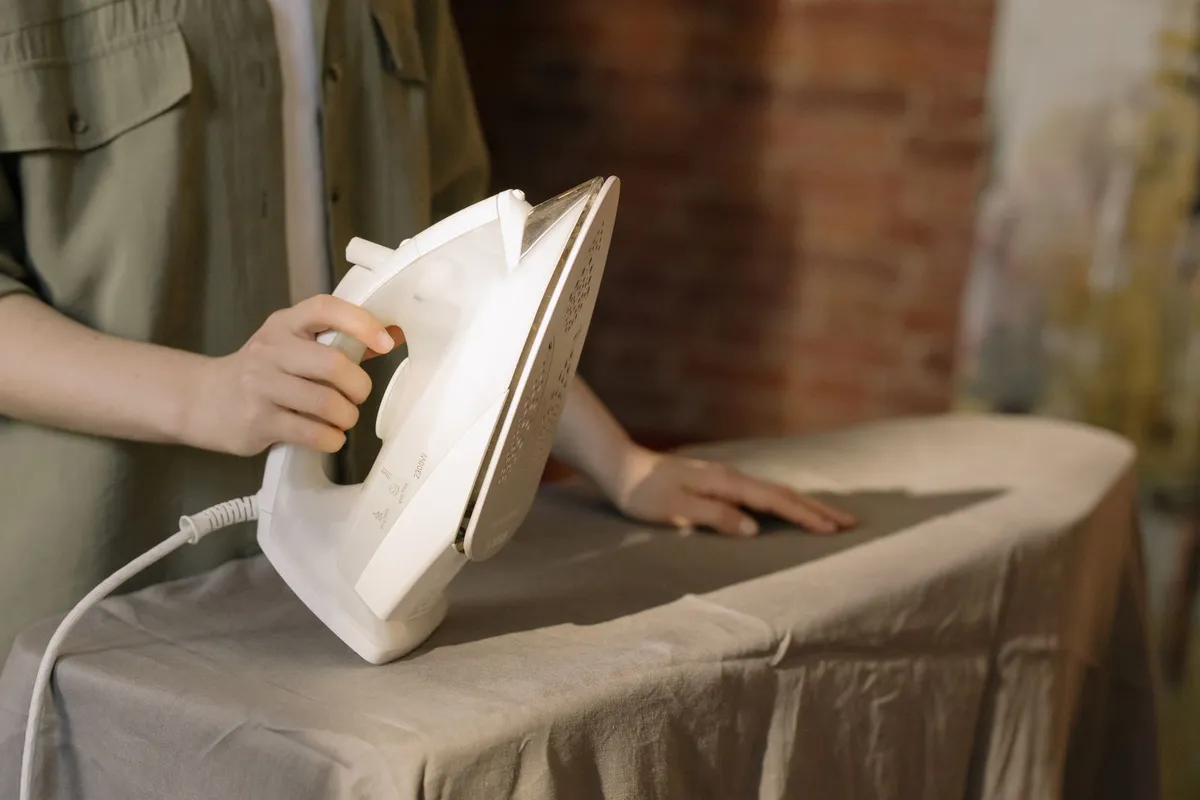
Ironing is an adult's job. Hama and Perler both say so, and it is easy to see why: a hot iron, a sheet of paper and a child who wants to look closely. The method is simple: ironing paper on the beads, a medium iron, circular movements without pressing, 10 to 20 seconds, then the other side, then something flat on top while it cools. Step by step in how to iron fuse beads.
If you would rather not iron with small children
- Leave it on the board. A three-year-old does not need a fused piece. Take a photo of the finished board, empty it back into the box and start again tomorrow.
- Maxi beads with their own boards. The Maxi pegboards are solid and the beads stay put better. The piece can also be ironed later, once the child is in bed.
- Glue is not a substitute. Glue does not fuse beads the way heat does. It is for fixing a piece that broke after ironing, or for sticking a magnet on the back. A piece that is only glued falls apart.
Which patterns suit which age
Kippadoo's pattern packs are all one 29 × 29 pegboard per pattern, with the colours and counts printed with the pattern. Every pack has one free sample pattern to try first.
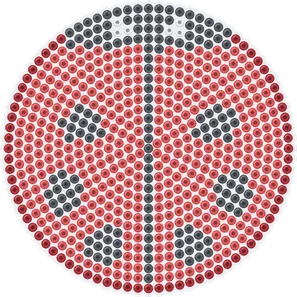
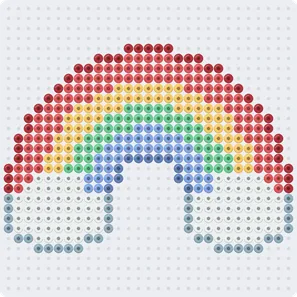
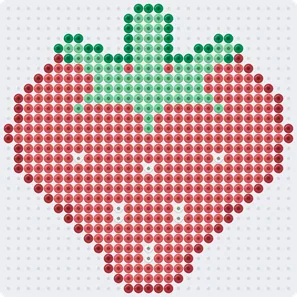
- From 5, with help: the round and simple shapes in Fruit, Nature and Animals: a watermelon, a rainbow, a ladybird.
- 6 to 8: Things that go, Space, the Halloween and Christmas packs, which also make a gift or a garland.
- 9 and up: anything in the packs, or a photo of their own in the pattern maker.
Four patterns that work as a first project, each on one pegboard:
Where to buy
The links below go to a search on Amazon. They are paid links: Kippadoo earns from qualifying purchases, and the price stays the same for you.
- Hama Maxi beads, 10 mm, for ages 3 and up (paid link)
- Hama Maxi pegboards (paid link)
- Perler Biggie Beads, for ages 4 and up (paid link)
- A Hama Midi gift box with mixed colours and pegboards (paid link)
- Ironing paper (paid link)
Sources
- Hama, Meet our different beads: Maxi 10 mm for 3+, Midi 5 mm for 5+, Mini 2.5 mm for 10+, and an adult does the ironing.
- Hama UK, Hama bead sizes: the ages are only a guide, and young children must always be supervised with My First HAMA.
- Perler, Biggie Beads Bucket: Perler's large beads, ages 4 and up.
- Perler, Standard Fusing Method: medium setting, circular motion, about 10 to 20 seconds per side.
- EU Toy Safety Directive 2009/48/EC, Annex V: the legal text of the "Not suitable for children under 36 months" warning (copy on legislation.gov.uk).
- European Commission, Toy safety: what the toy safety directive covers and the new EU toy safety regulation that replaces it.
As an Amazon Associate, Kippadoo earns from qualifying purchases.
Questions
From about 3 with Hama Maxi beads (10 mm), from 4 with Perler Biggie Beads, from 5 with the normal 5 mm midi beads and from 10 with mini beads. The makers give these ages as a guide; the child's patience and fingers decide.
Midi beads are small parts and carry the warning: not suitable for children under 36 months. For a two-year-old, only the 10 mm Maxi beads, with an adult at the table.
Some can, with a shaped pegboard, two colours and a short session. Hama gives 5+ for midi beads; Perler's Biggie Beads are the in-between size for ages 4 and up.
No. Hama and Perler both say an adult does the ironing. Children can lay the paper on, watch, and lift the paper once it has cooled.
Glue does not fuse the beads; a glued piece falls apart. Glue is for repairing a fused piece that broke, or for sticking a magnet on the back. If you do not want to iron, leave the piece on the board and take a photo.