Mini, midi or maxi fuse beads: which size to choose
Fuse beads come in three sizes, and each has its own pegboards and its own age on the pack. Maxi beads are for small hands, midi is the size most patterns use, and mini beads are for fine detail. Here are the exact sizes for Hama and Perler and what each one is good for.
Updated 28 October 2026
The three sizes at a glance
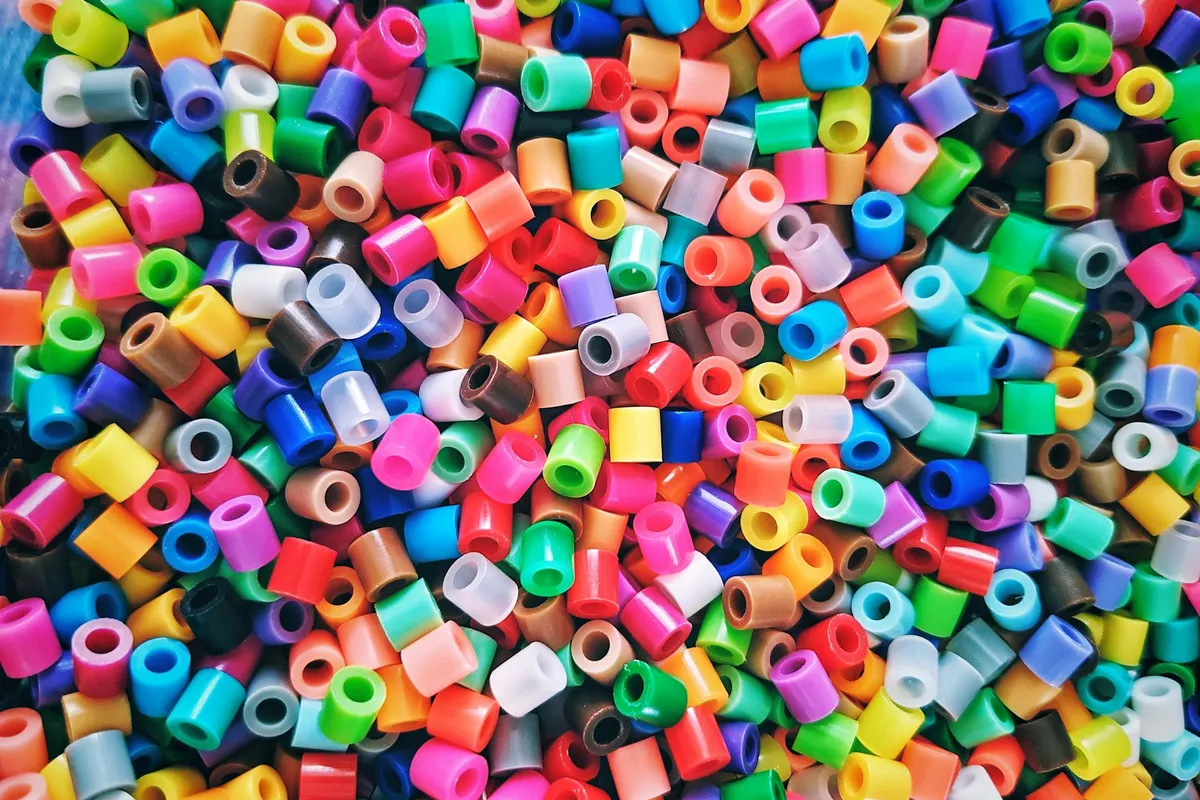
Hama and Perler both make a large, a regular and a small bead. The names differ, the idea is the same:
- Hama Maxi (sold as My First Hama): 10 mm across. Hama prints 3+ on these.
- Hama Midi: 5 mm across, the regular size. Hama says 5+.
- Hama Mini: 2.5 mm across. Hama says 10+.
- Perler Biggie: Perler's large bead, described as larger than its classic beads. Rated ages 4 and up.
- Perler classic: about 5 mm (Perler gives 5.07 mm high and 4.77 mm wide). Rated ages 6 and up.
- Perler mini: about 2.6 mm (2.8 mm high, 2.61 mm wide). Rated ages 12 and up.
So the regular sizes of both brands are close to 5 mm, and each step up or down roughly doubles or halves the bead. The regular bead is the one people mean when they just say "fuse beads" or "Hama beads".
Which size for which age
Hama says the ages are a guide and that the right size depends on the child's skill and patience. Read them as a starting point:
- Toddlers and preschoolers (about 3 to 4): maxi or Biggie. The beads are big enough for small fingers to pick up and push onto the pegs. Hama says young children must always be supervised when using My First Hama.
- From about 5 or 6: midi or Perler classic. This is the size most children use for years, and many adults stay with it too.
- From about 10 to 12: mini beads, if the child enjoys slow, precise work. Hama's own description is that mini beads need patience.
Moving up a size is a step, not a test. A five-year-old who finds midi beads frustrating can stay on maxi for a while longer, and an adult who finds mini beads too fiddly is not alone.
Small parts and choking
All fuse beads are small parts. Hama's packs carry a warning that they are not suitable for children under 3 because small parts can be swallowed, and that includes the maxi beads made for the youngest children. Keep loose beads away from babies and children who still put things in their mouth, and stay at the table while toddlers play with maxi beads.
Both brands also say the ironing is done by an adult, whatever the bead size. Children place the beads; an adult fuses them.
Does one pegboard fit every bead size?
No: every size has its own pegboards, and they do not mix. Hama UK says its beads and pegboards from different size ranges are not compatible, and Perler's mini boards are marked "not for use with standard size beads"; its Biggie beads are for Biggie pegboards only. When you buy a board, check that it matches your beads.
Hama's large square boards are all roughly the same size in the hand, but hold very different numbers of beads:
- Maxi large square: 256 pegs, so 16 × 16 beads.
- Midi large square: 841 pegs, so 29 × 29 beads.
- Mini large square: 3,249 pegs, so 57 × 57 beads.
That is why a mini design can show much more detail than a midi design of the same size. Within one size range, Hama's square boards can be clicked together with boards of the same type for bigger pieces.
How big the finished piece will be
Each bead takes up about its own width, so you can work out the size of a finished piece from the bead count. Take a design that is 29 × 29 beads, the size of one large midi board:
- In midi beads it comes out at about 14.5 cm square.
- In maxi beads the same design is about 29 cm square, and it no longer fits on one board: you need four large maxi boards joined together.
- In mini beads it shrinks to about 7 cm square.
Ironing makes the beads settle a little, so treat these as "about" figures. The same sum works for any pattern: count the beads across, multiply by 1 cm for maxi, 0.5 cm for midi or 0.25 cm for mini.
What each size is good for
Maxi: first shapes
Maxi beads suit simple shapes with a few colours: a heart, a sun, a fish, a letter. Hama also sells shaped maxi pegboards, so a young child can fill in the outline without following a pattern. Hama's Maxi Stick is a placing tool made for these beads.
Midi: most patterns
Midi is the size for almost everything else: animals, food, figures, coasters, ornaments and 3D models. It has by far the most colours (Hama lists 86 midi colours against 31 for maxi) and most patterns you find online are drawn for it. The pattern packs and the pattern maker on Kippadoo are made for midi boards too, either the square 29 × 29 board or the round, hexagon and star boards.
Mini: detail and jewellery
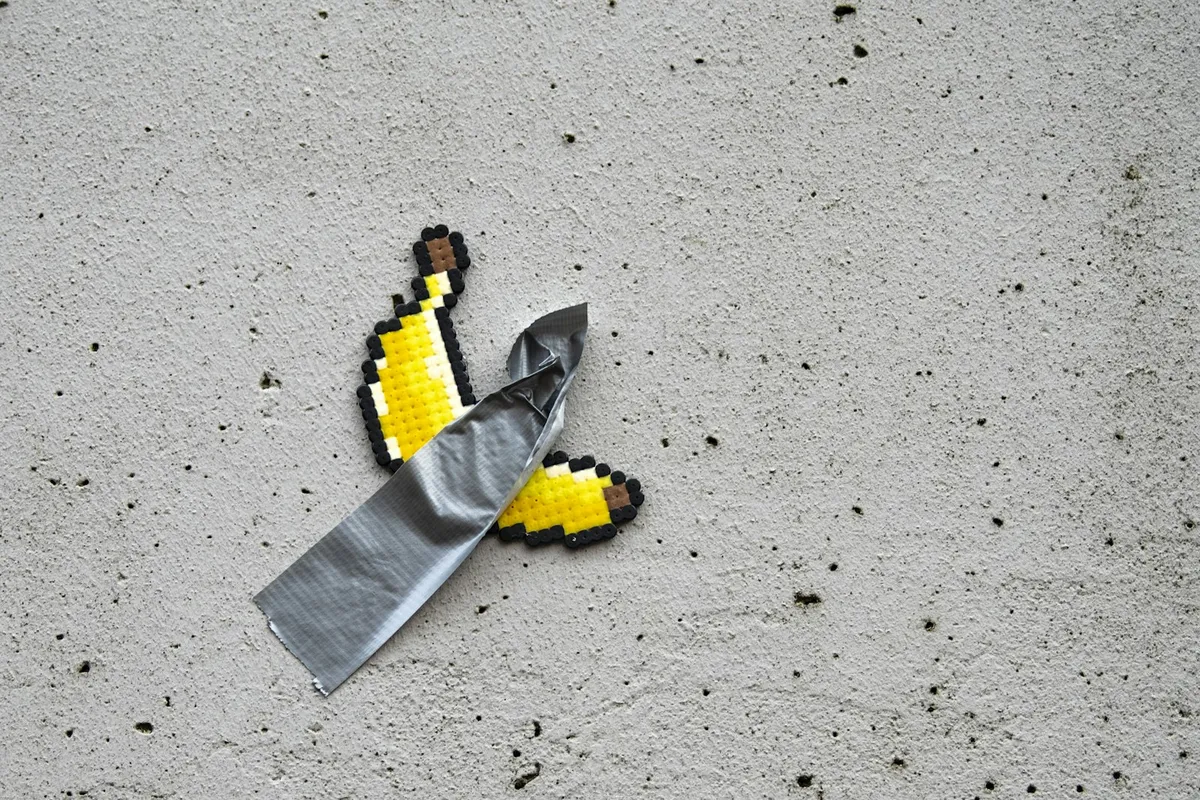
Mini beads give a fine, almost pixel-like picture and a small, light piece. People use them for earrings, pendants, keychains and fridge magnets, and for portraits or game sprites that need many beads in a small space.
Tools for mini beads
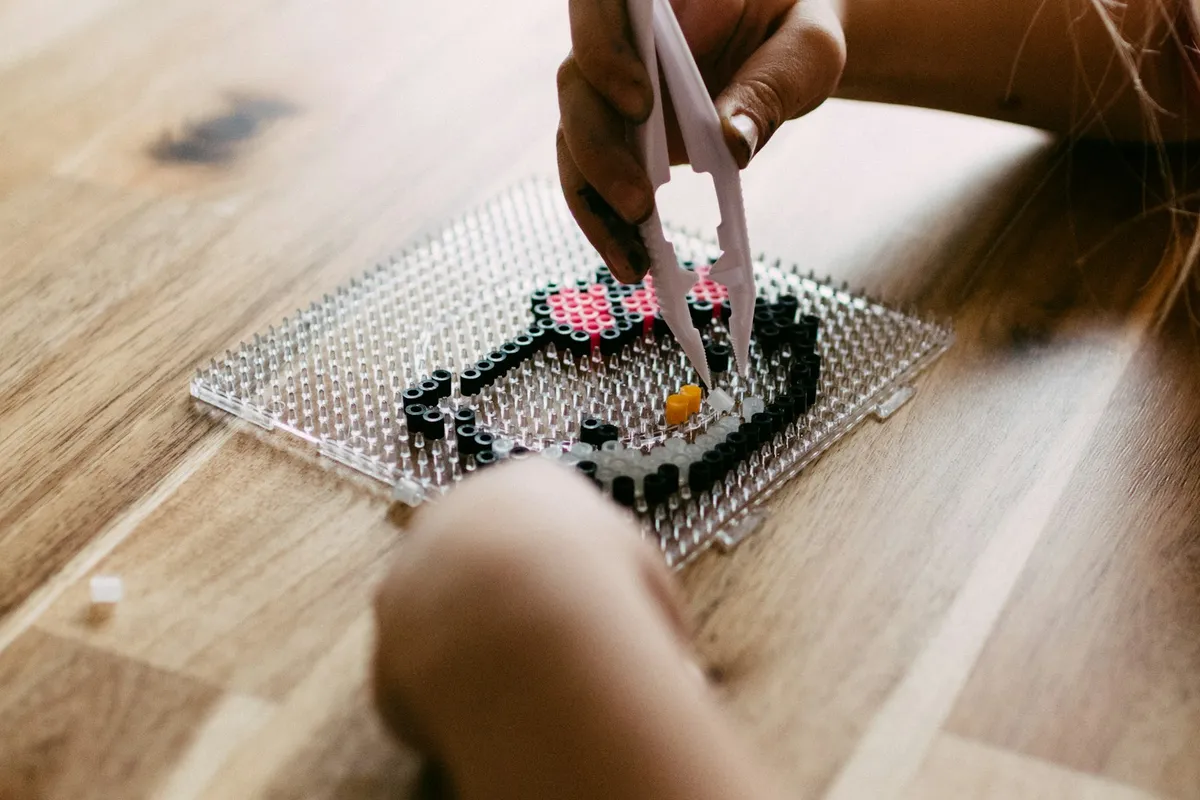
At 2.5 mm, mini beads are hard to pick up with fingers. Hama suggests tweezers, and Perler sells metal Mini Beads Tweezers made for its mini beads (rated ages 14 and up). Perler's regular tweezers are rated ages 6 and up and also work for midi beads. A small dish or tray for each colour helps, because mini beads roll away easily.
Which iron setting goes with which size?
Bigger beads need more heat, smaller beads less. Hama's instructions suggest wool for mini, cotton for midi and linen for maxi. The full steps are in how to iron fuse beads.
Where to buy
The links below go to a search on Amazon. They are paid links: Kippadoo earns from qualifying purchases, and the price stays the same for you.
- Hama maxi beads and pegboards (10 mm) (paid link)
- Hama midi beads (5 mm) (paid link)
- Hama mini beads and pegboards (2.5 mm) (paid link)
Sources
- Hama, Meet our different beads: Maxi 10 mm for 3+, Midi 5 mm for 5+, Mini 2.5 mm for 10+, ironing by an adult.
- Hama UK, Hama bead sizes: ages are a guide, sizes are not compatible with each other's pegboards, tweezers for Mini, supervision with My First HAMA.
- Hama, Midi pegboard large square: 841 pegs, from 5 years.
- Hama, Instructions: wool for Mini, cotton for Midi, linen for Maxi.
- Perler, Biggie Beads Bucket: larger than Perler's classic beads, ages 4 and up.
As an Amazon Associate, Kippadoo earns from qualifying purchases.
Questions
Hama's regular beads are the Midi range, 5 mm across. Mini beads are 2.5 mm and Maxi beads 10 mm.
Hama prints 3+ on its Maxi beads and Perler rates its Biggie beads for ages 4 and up. Both still contain small parts, so a toddler should be supervised.
No. Each size has its own pegboards; Hama and Perler both say the boards are not interchangeable between sizes.
The regular sizes are close: both are about 5 mm. Perler gives 5.07 by 4.77 mm for its classic beads, Hama 5 mm for Midi.
A large square midi board holds 29 × 29 beads, which makes a finished piece of about 14.5 cm square.