How to iron fuse beads
Ironing is the step that turns loose beads into one piece. It goes right with the correct iron setting, ironing paper, small circles and a heavy book while it cools. Here is how, for Hama and Perler beads.
Updated 28 October 2026
What you need
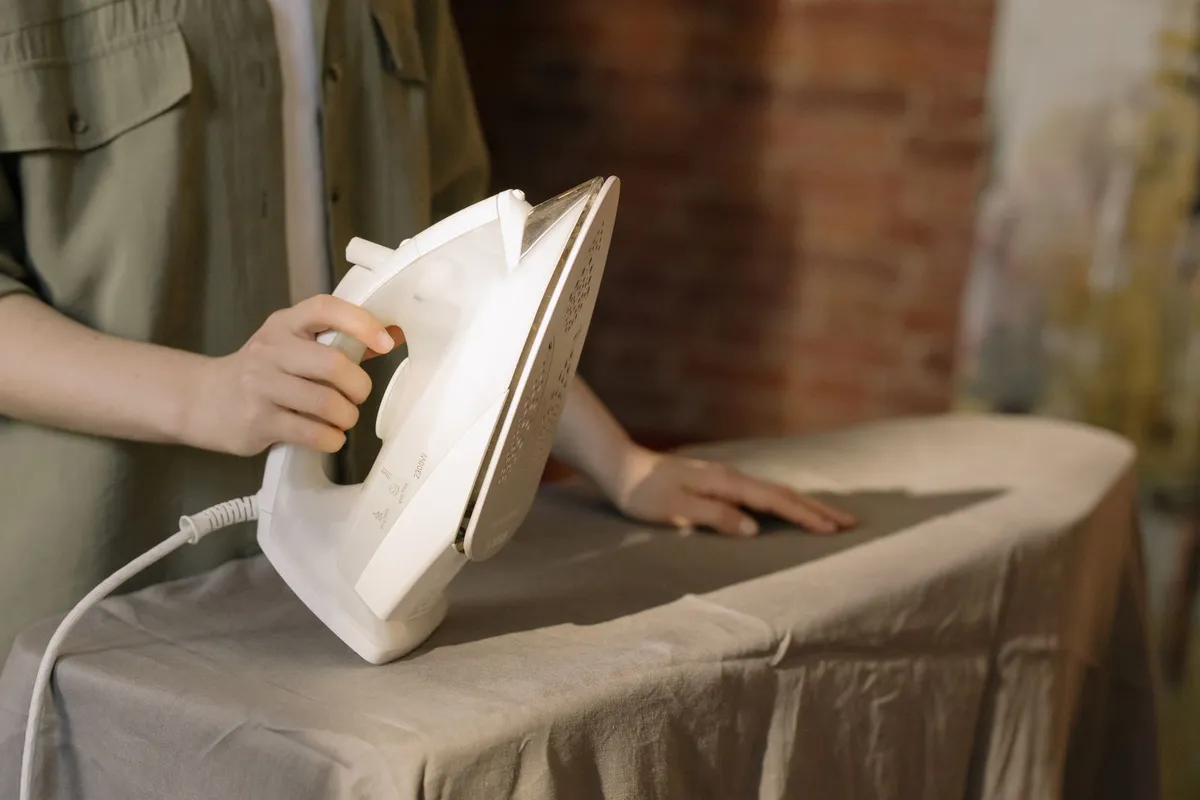
- An iron with the steam turned off. An old one is fine; the beads never touch it.
- Ironing paper. Hama and Perler both sell it with their beads, and it can be used many times. Without paper the beads stick to the iron.
- A flat surface that can take heat, such as an ironing board or a wooden board on the table.
- A heavy book to keep the piece flat while it cools.
Which iron setting do fuse beads need?
Fuse beads need a middle setting, adjusted to your iron. Perler's fusing instructions say medium, and Hama's instructions give a setting per bead size:
- Mini beads (2.5 mm): wool
- Midi beads (5 mm, the usual size): cotton
- Maxi beads (10 mm): linen
Irons differ, so both brands suggest trying a small piece first. If the beads melt into flat discs within a few seconds, turn the iron down; if nothing happens after half a minute, turn it up.
Step by step
- 1Put the pegboard with your finished design on the flat surface. Check for beads that are lying on their side and set them upright.
- 2Let the iron warm up on the chosen setting, with steam off.
- 3Lay the ironing paper over the whole design. Make sure it covers every bead.
- 4Iron in small circles with light pressure. Perler says not to press down. Keep the iron moving and don't let it touch the pegs around the design: hot plastic pegs bend.
- 5Lift a corner of the paper now and then. You can see the beads fuse through the paper; stop when the beads have joined and the holes are still open.
- 6Leave the paper on and let the piece cool for a few minutes. Then peel off the paper and lift the piece off the board.
- 7Turn the piece over and iron the other side the same way, on the table rather than the board.
- 8Put it under a heavy book while it cools completely, so it stays flat.
How long do you iron fuse beads?
About 10 to 20 seconds per side: that is what Perler gives for an even fuse. A piece bigger than one pegboard needs more time, so work across it in parts. Some colours melt faster than others, which is why lifting the paper to look is more reliable than a timer.
Open or closed holes
How long you iron decides how the piece looks:
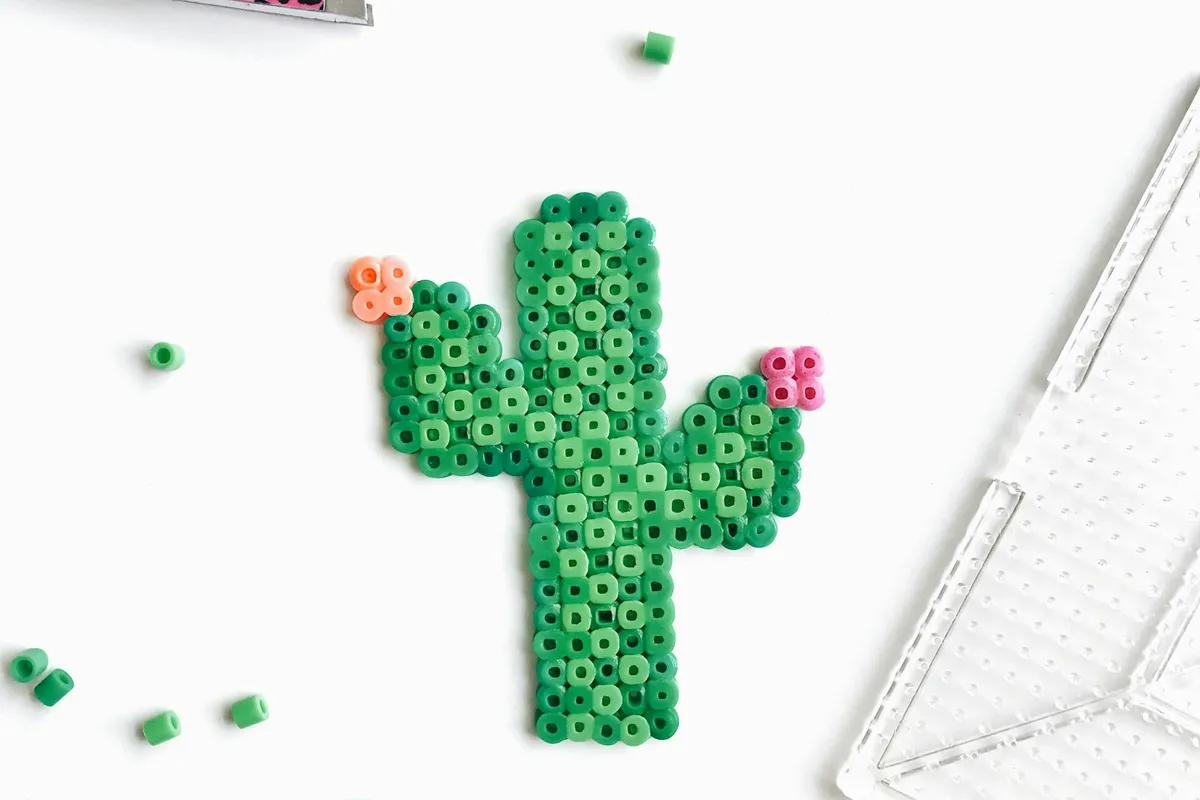
- Lightly fused: the beads are joined but the holes stay round and open. This is the classic look, and the right one when you want to build something in 3D, because the pieces are easier to slot together.
- Fully fused: the holes shrink to dots and the piece becomes stiffer. Good for coasters and pieces that get handled a lot. Iron a little longer, but stop before the beads lose their shape.
Keeping it flat
Pieces curl while they cool. Put them under a heavy book or a cutting board straight after ironing and leave them there until they are cold. If a piece has already curled, warm it again briefly under the ironing paper and put it back under the book.
When it goes wrong
- The beads don't stick together: the iron is too cool or you stopped too early. Iron a bit longer, or one setting higher.
- The beads stick to the paper: the paper is worn or too hot. Let it cool before you peel it off, and replace paper that has turned shiny or stiff.
- The piece breaks apart at thin parts: iron both sides, and a little longer around single beads that only touch one neighbour.
- The pegboard has gone wavy: the iron touched the pegs. A bent board no longer holds beads straight; keep the iron inside the design.
More fixes are in fuse bead problems and how to fix them.
Ironing with children
Hama and Perler both say an adult does the ironing. Children can place the beads and lift the paper to check how far it is.
Something to iron
If you need a design, the pattern packs have ready-made patterns for one pegboard, and the pattern maker turns your own photo into one.
Where to buy
The links below go to a search on Amazon. They are paid links: Kippadoo earns from qualifying purchases, and the price stays the same for you.
- Ironing paper for fuse beads (paid link)
- Large square pegboards (29×29) (paid link)
Sources
- Perler, Standard Fusing Method: the maker's own steps: medium setting, ironing paper, circular motion, about 10 to 20 seconds per side, do not over-iron.
- Hama, Instructions: the maker's own steps: wool for Mini, cotton for Midi, linen for Maxi, test a small piece first, keep the iron off the pegs, ironing by an adult.
- Perler, Frequently Asked Questions: every iron is different; iron both sides of the design.
As an Amazon Associate, Kippadoo earns from qualifying purchases.
Questions
No. Without paper the melted beads stick to the iron. Use the ironing paper sold with the beads; many people also use baking paper.
It is not required, but it makes the piece much stronger. Iron the front on the board, let it cool, then turn it over and iron the back on the table.
Hama suggests cotton for midi beads, wool for mini beads and linen for maxi beads. Irons differ, so test a small piece first.
Usually the iron is too cool or was moved away too soon. Turn it up one step, keep moving in small circles and lift the paper to check.
No. Hama and Perler both say an adult does the ironing. Children place the beads and can lift the paper to check how far it is.