How to make fuse bead fairy lights
Fuse bead fairy lights are a string of LED fairy lights with a small ironed motif on every light: a star, a flower or a snowflake that glows when you switch it on. There are two ways to make one, and both start with the right lights. Here is what to use, how to leave a hole that fits, and which patterns work.
Updated 18 November 2026
Two ways to make fuse bead fairy lights
- A motif on every light. You make small motifs with an empty space in the middle, iron them, and push one light through each hole. The light shines out of the centre of the star or flower.
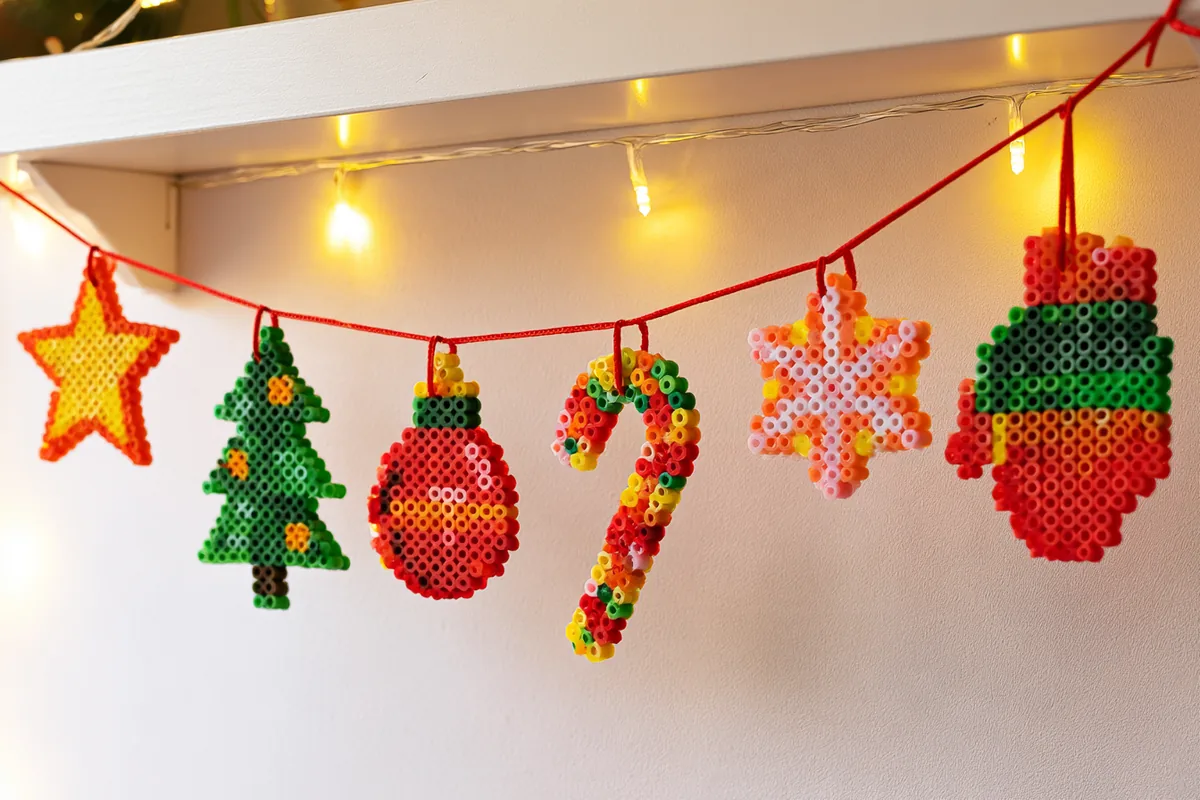
- Motifs on a string beside the lights. You thread finished motifs onto a ribbon or string and wind the fairy lights along it. Nothing has to fit, so this is the easier way with young children.
Which fairy lights to use
Use LED fairy lights. LEDs give off very little heat: the US Department of Energy says they "emit virtually no heat", while old incandescent bulbs turn 90% of their energy into heat. Fuse beads are plastic that softens under an iron, so they belong on lights that stay cool, never on an old set with filament bulbs.
Energy Safe Victoria, an electrical safety regulator, lists LED and extra-low-voltage lights (5, 12 or 24 volts) among the safest options, and warns that high-powered lamps can get very hot and must be kept away from anything that might catch fire. A battery-operated LED set on thin wire is the easiest for this craft: the bulbs are small, the wire bends, and there is no plug near the beads.
- Check the set before you start: no damaged wires, no cracked bulbs. Energy Safe Victoria says never to use a damaged lead.
- Read the instructions that came with the lights, and follow what they say about indoor use and covering the bulbs.
- Switch the lights off before you go to bed or leave the house, as Energy Safe Victoria advises for all decorative lights.
Method 1: a fuse bead motif on every light
- 1Measure a bulb. Look at one light on your set and how thick it is. A midi bead is 5 mm across, so one empty peg leaves a gap of about one bead; a thicker bulb needs a gap of two by two beads.
- 2Pick a small motif. A star, a flower, a heart or a snowflake, 7 to 14 beads across. On a set with lights 10 cm apart, keep motifs under 10 cm wide; 14 midi beads is about 7 cm.
- 3Leave the middle empty. Place the motif on the pegboard and leave the centre peg (or the centre four) without a bead. A ring of one colour around the hole looks like the light's own shade.
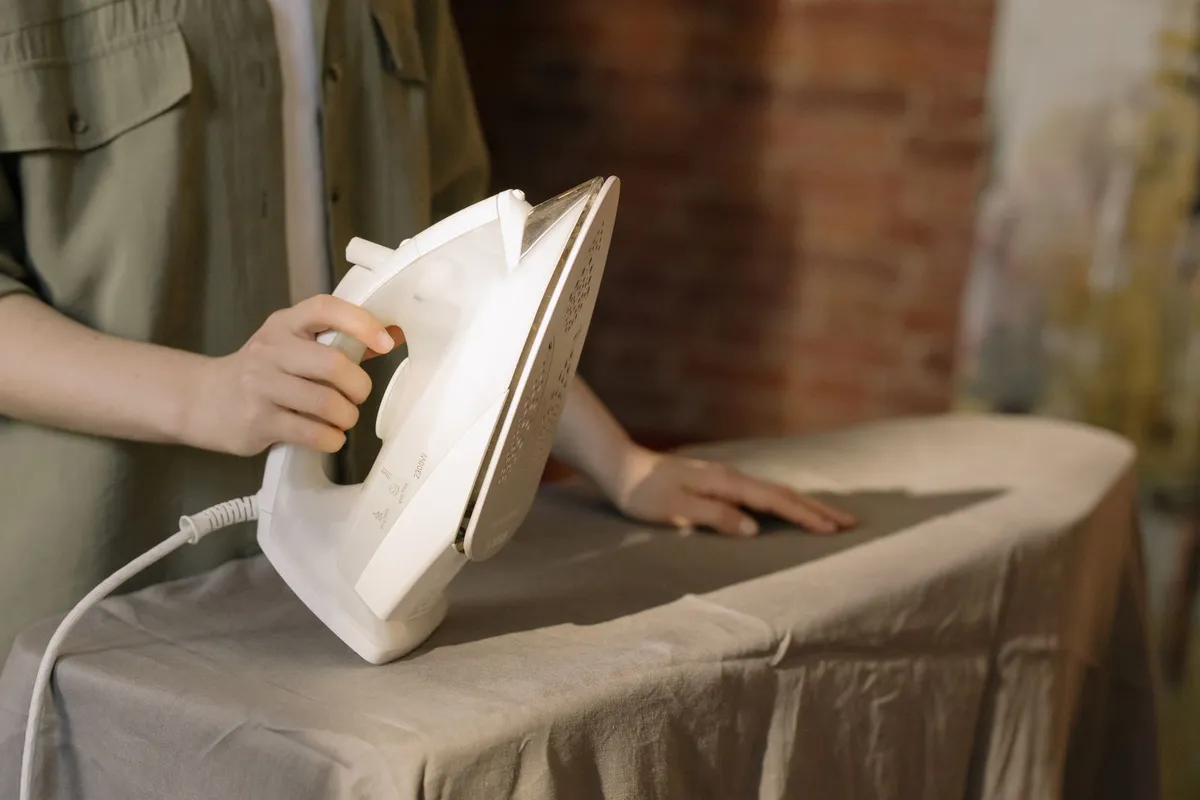
- 4Iron lightly. Iron under ironing paper until the beads just hold together, on both sides. The longer you iron, the more the holes shrink, and that includes the big one in the middle. Step by step in how to iron fuse beads.
- 5Let it cool flat under a heavy book, so the motif sits straight on the light.
- 6Push a light through from the back. Hold the motif, guide the bulb through the hole and let the motif rest on the base of the bulb or the wire.
If a motif keeps sliding down the wire, a twist of the wire behind it holds it in place, or a small piece of clear tape on the back of the motif and the wire. Keep glue off the lights themselves.
Method 2: motifs on a string with the lights beside them
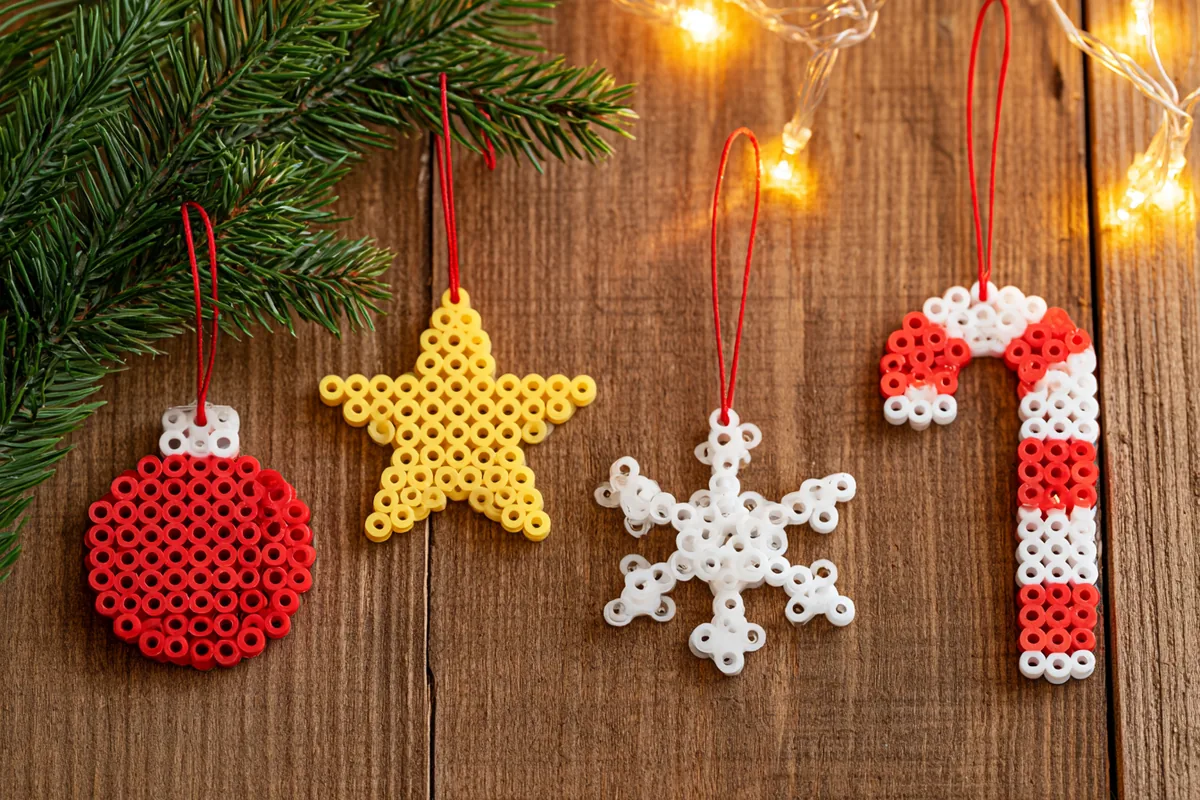
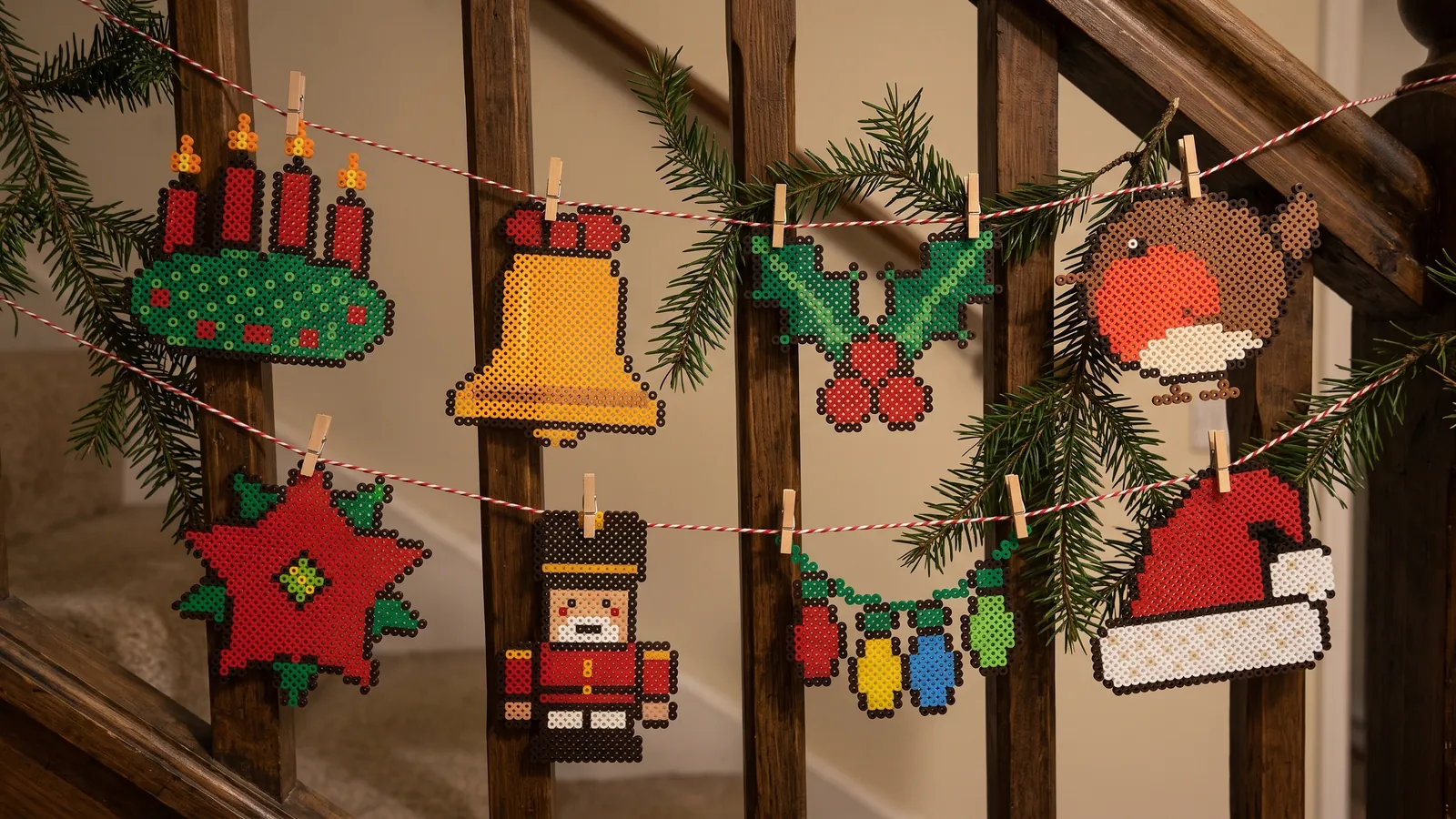
This is a garland with lights. Thread the finished motifs onto a ribbon or thin string through a bead hole at the top edge, as in Perler's ornament projects, then wind the fairy light wire loosely around the string. The lights shine on the beads from the side. It works with any pattern, even the big ones on a full pegboard, and nothing has to fit around a bulb. Where to put the hole so a piece hangs straight is in Christmas fuse bead ideas.
Transparent beads let the light through
Light shines through transparent colours. With solid colours, it only shows through the hole in the middle.
Patterns for fuse bead fairy lights
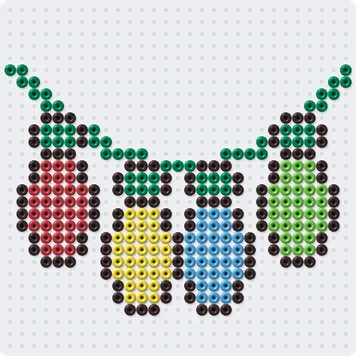
Kippadoo's fairy lights pattern is the other way round: a picture of a string of coloured fairy lights, made in beads on one 29 × 29 pegboard. It is the free sample of the Christmas Eve pack, so you can print it straight away. It does not light up, but it makes a bright piece for a garland, a card or a window.
For motifs that sit on the lights, small shapes work best. The 14 × 14 patterns in the Space party bags pack, such as the twinkling star, the full moon and the comet, are the right size; leave the centre four beads out yourself. For bigger pieces on a string beside the lights:
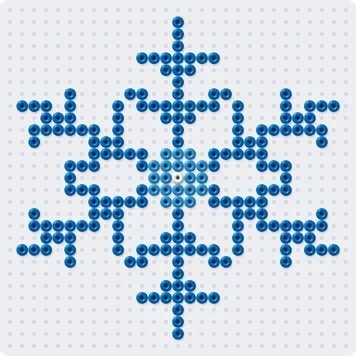
- Christmas: the star and the snowflake from the Christmas pack, and the eight snowflakes.
- Hanukkah: the Hanukkah candle and the gold hanukkiah from Lights, oil and gelt.
- All winter: the Winter pack with a snowman, mittens and a woolly hat.

With children
- Children can do all the bead work: sorting, placing, and leaving the middle empty. The ironing stays with an adult, as Hama and Perler both say.
- Fit the motifs onto the lights together, with the lights switched off.
- Hang the finished chain where small children cannot pull it down, and keep loose beads away from the under-threes.
Where to buy
The links below go to a search on Amazon. They are paid links: Kippadoo earns from qualifying purchases, and the price stays the same for you.
- Battery-operated LED fairy lights on thin wire (paid link)
- Midi fuse beads in transparent colours (paid link)
- Small pegboards: star, flower, heart (paid link)
- Ironing paper (paid link)
Sources
- US Department of Energy, Guide to Energy-Efficient Lighting (PDF): LEDs emit virtually no heat; incandescent bulbs waste 90% of their energy as heat.
- Energy Safe Victoria, Christmas light safety: LED or extra-low-voltage lights, keep hot lamps away from anything that might catch fire, never use a damaged lead, switch off at bedtime.
- Hama, Meet our different beads: Midi beads are 5 mm.
- Perler, Heart Ornaments: a ribbon through beads at the top edge to hang a piece.
As an Amazon Associate, Kippadoo earns from qualifying purchases.
Questions
Make small motifs with the centre peg left empty, iron them lightly on both sides so the hole stays open, and push one LED light through each hole. Or thread finished motifs onto a string and wind the fairy lights along it.
Use LED lights only, which give off very little heat, ideally a battery set, and follow the light set's instructions about covering the bulbs. Never put plastic beads on old filament bulbs.
Measure a bulb of your set. A midi bead is 5 mm, so one empty peg leaves a gap of about one bead, and four empty pegs a gap of two by two. Try one motif before you make the rest.
Yes: the fairy lights pattern in the Christmas Eve pack, a picture of a string of coloured lights on one 29 × 29 pegboard. It is the pack's free sample.
Yes, the bead work is a good job for children from about 5. An adult does the ironing and checks the lights before they are switched on.